Showing posts with label mythology. Show all posts

Thursday, 31 July 2014

The Beastiary: Entry III, Sentinels

Defined by their Sensing and Judging qualities, Sentinel types are defined by their pragmatism and their ability to devote themselves to the causes they consider to be worthy of their sponsor. They are excellent planners and managers, both of resources and of people, and excel in all things measurable or anything which concerns concrete facts. This is not to preclude artistic or poetic drives, only that those drives will often be defined by their groundedness.

The four types for discussion in this entry, and the creatures I have matched them with are as follows: ESFJs (Erinyes), ESTJs (Dragons), ISFJs (Valkyries) and ISTJs (Vampires).
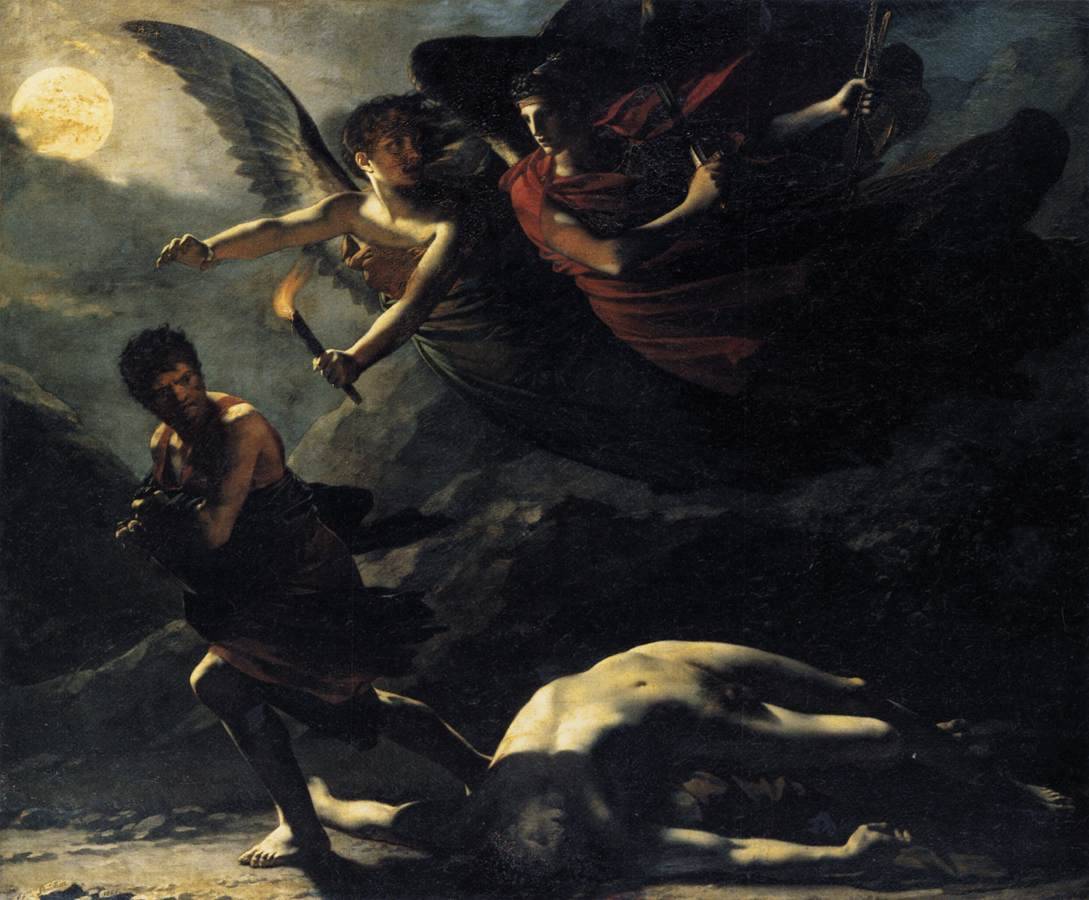
Image posted by Victorious Vocbulary

ESFJs (The Provider) - Erinyes

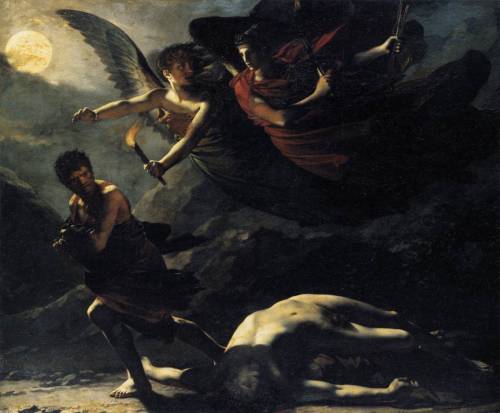
Within the extensive and complicated mythologies of Classical Greece, the Erinyes, whose name apparently translates as avengers of perjury, were deities of vengeance who existed to punish those who did wrong, most notably those who broke their oaths. Erinyes are more commonly known as the Furies and according to some sources, they are more ancient than any of the Olympian Gods (by which we mean Zeus and his "merry" household).

ESFJ most accurately aligns with the Erinyes due to this type's love of loyalty. Providers want what is best for those around them and this can only be reached if everyone practices a fierce kind of loyalty. ESFJs seek to promote overall benefit for everyone and, though the Furies are fearsome and a curse upon those they are seeking, in providing an incentive for loyalty and companionship they (and their legacy) encourage honesty and comradeship, which allow peace for all to enjoy. Furthermore, Providers, like the Erinyes, take their duties with the utmost seriousness, devoting themselves to the benefit of those around them. Erinyes are single-minded when it comes to their task, unflinchingly dedicated. While this supernatural devotion is not exactly matched by the ESFJ, they are very passionate and focused individuals. That the Provider retains a keen eye on social status further reflects the way in which the Erinyes exist to deal with contractual (often social) problems. 
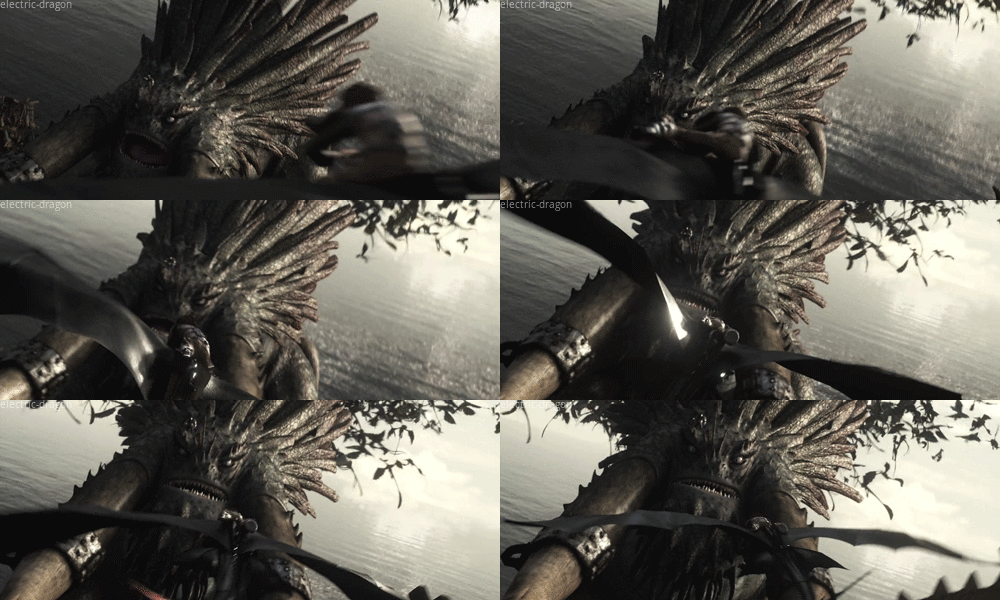

Image posted by Electric-Dragon

ESTJ (The Enforcer) - Dragons

I should not have to tell anyone what a Dragon is, so I am not going to do so.

Enforcers are representative of tradition and order within the MBTI network of personalities, they are exceptionally capable to understand social traditions and ideals and then employ them in such a way to sway other individuals and unite them, often under the banner of the ESTJ. Likewise, Dragons are depicted almost always, as being among the most ancient of beings, whose very lives are tied to a world forgotten, yet whose existence is important, if not integral, to the functioning of the world. In much the same way, ESTJs seek to enable the persistence of certain aspects of human existence through maintaining, sometimes singlehandedly, the structures which have enabled society and human interaction to endure for as long as they have. It helps that Enforcers are excellent organisers of people, as are Dragons who are often depicted has having lived in sprawling empires eons before humanity, or something comparable, came onto the scene. 

In a more metaliterary manner, we can see Dragons as a stabilising presence within the fantasy genre, for depictions of them have extended back into history unknown and there are still novels and films and all manner of other media being produced today which makes full use of this ancient archetype. 

Image posted by Fairy Univserse

ISFJ (The Protector) - Valkyries

Within Norse mythology, the Valkyries were the "choosers of the slain" a group of female entities whose role was to determine who would live and die in combat, as well as to collect the souls of fallen warriors who they deemed worthy and deliver them to Valhalla, where they would train for Ragnarok, the great battle which would remake the world.

Valkyries exist to support the Gods and ensure that they have the greatest chances when the dreaded battle finally arrives and likewise ISFJs are "all about" sharing their time, energy and compassion in order to support other people, especially if those other people are united with them in a cause they believe in. Protectors are, furthermore, loyal and enthusiastic, as are the Valkyries, who are entirely devoted to their assigned tasked. ISJFs are practically oriented and can handle themselves in practical tasks more often than not, which is reflected in the Valkyries who are masterful combatants, their very existence is, after all, devoted to combat. Even in basic namesake, Valkyries are protectors. Without them, the Norse Gods would lack the army they require to defend themselves and creation in the great battle. They are the first and last line of defence.

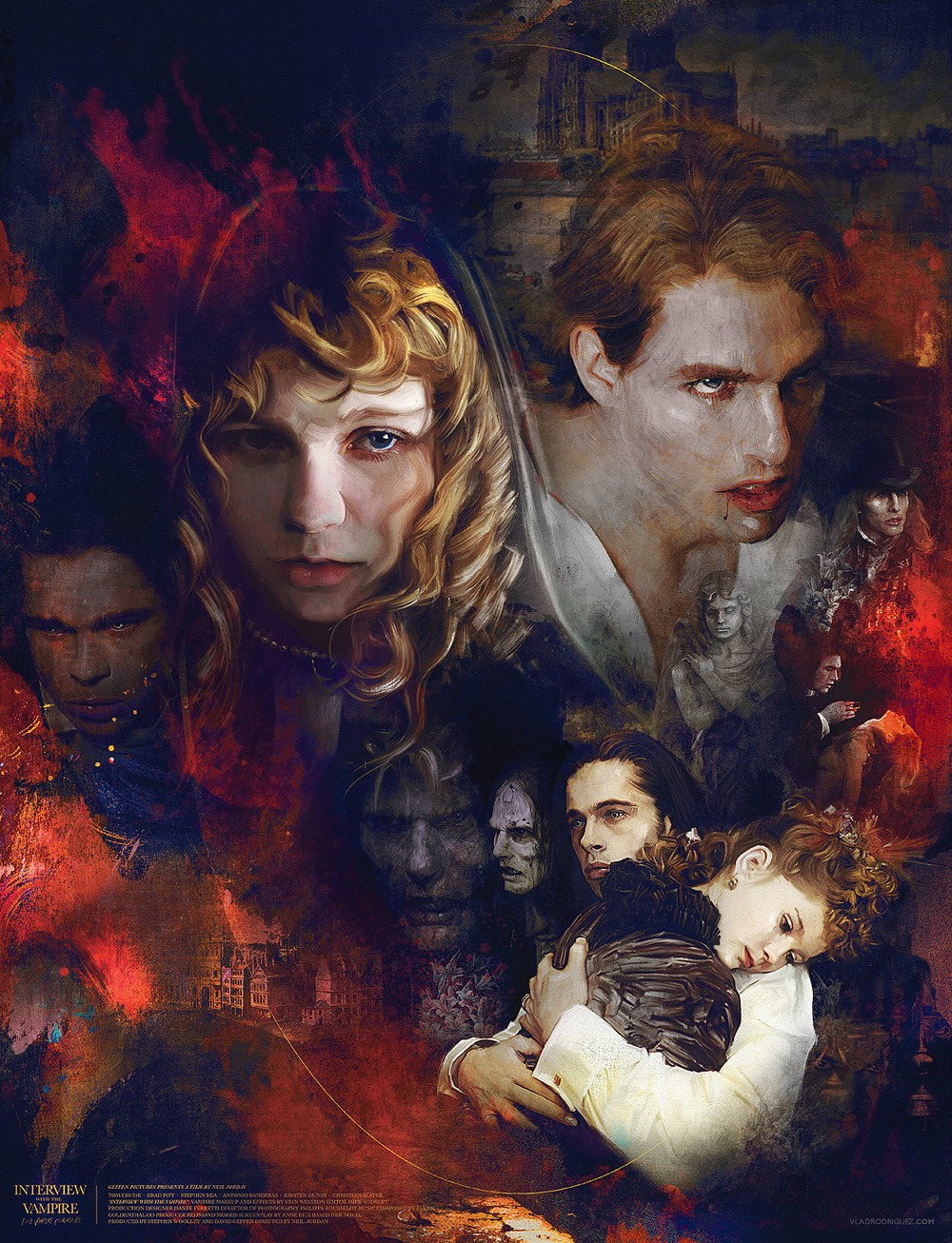
Celebrate 20 years of the iconic vampire thriller. 'Interview with the vampire' Print’s will be Available Here
Imaged posted by Vlad Rodrigeuz

ISTJ (The Guardian)  - Vampires

ISTJs are calm, pragmatic individuals who, though they are more than capable of experiencing strong emotions, are able to keep themselves under control in most situations. This is comparable to the Vampiric coolness with which these creatures are often portrayed. Traditional depictions consider Vampires to be aristocratic and collected individuals who are so terrifying due to their never being concerned. After all, when one is immortal and able to overpower any human opponent, what does one have to fear?

Guardians often excel in multiple areas at once, making them jack-of-all-trades. Vampires are so wide and varied in terms of their portrayal and given so many different abilities and skills that the very idea of a Vampire fits into this idea. Furthermore, guardians are restricted by their own set of rules, much like Vampires are confined by the limitations of their condition, be they whatever they are, forced to live off human blood and remain inside during the day being the two most iconic. 


This concludes the third entry. In the final part, I will discuss the Diplomat personalities: ENFJ (Dryads), ENFP (Fae), INFJ (Angels), INFP (Muses).

Thanks for reading!

Thursday, 24 July 2014

The Beastiary: Entry II, Analysts

The topic of this entry is the Analyst Myers-Briggs Types: INTJs, INTPs, ENTJs and ENTPs. These types are known as Analysts because they combine the Introverted and Thinking traits, granting them increased ability to deal with abstract concepts and process large amounts of factual information. They often excel in the more strictly logical portions of disciplines and are more often than not more comfortable with ideas and information than they are with people. 

The creatures I will be discussing during this entry are...Devils, Doppelgangers, Sphinxes and Wisps.


Image posted by The Koochinko

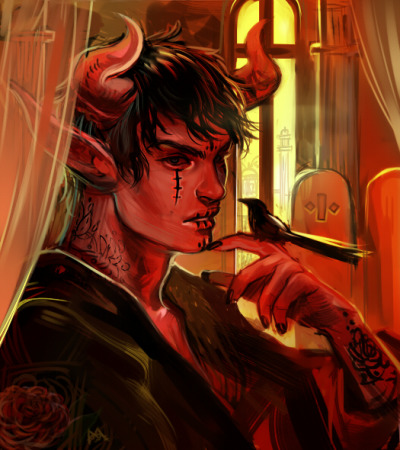
INTJs (The Strategist) - Devils

First off, I would like to make it clear that, as with all of my MBTI related stuff, there is no judgement present and I am not here intending to say that INTJs are in any way immoral. I am, however, saying that, from a perspective of personality, there are links with Devils (as they are presented in popular culture and beyond), which, it is important to note are not necessarily evil in and of themselves.

Having made the clear, why are INTJs comparable with Devils?

A central quality for the Strategist is a high degree of self-confidence, which can, in some cases, lead to arrogance or at least a tendency towards stubbornness. This concept of INTJ pride, ties in nicely to the fact that devils are often presented as wielding great power, a nod to the INTJ tendency to be very adept within certain fields, but also of their power tied with their ambition and their self-confidence. These are initial reasons, however, and the main reason I have decided to compare INTJs and Devils is because of the Strategist's wit and ability to think quickly and, most of all, to develop contingency plans and be consistently prepared. This kind of behaviour is displayed in Devil characters as they always have a way of turning the situation to their advantage. Centric to the personality of the Strategist is their ability to quickly understand a system of rules and exploit them to their advantage and this very much reminded me of the idea of Devilish Pacts, or contracts with the Hells. In such cases, mortals will promise something to the Devil, usually their soul, in exchange for that which they desire, though the Devil nearly always manages to exploit the terms of the contract so that the mortal ends up with nothing. 

Interestingly enough, despite their ability to flourish in organised environments, INTJs often wish to break out and assert their liberty and this can be seen within devils as well. In spite of their contracts and bargains, both of which are governed by many rules, Devils are nearly always portrayed as wishing to get out of Hell, to leave behind those structures and assert themselves. 


Image by Dumonchelle Draws

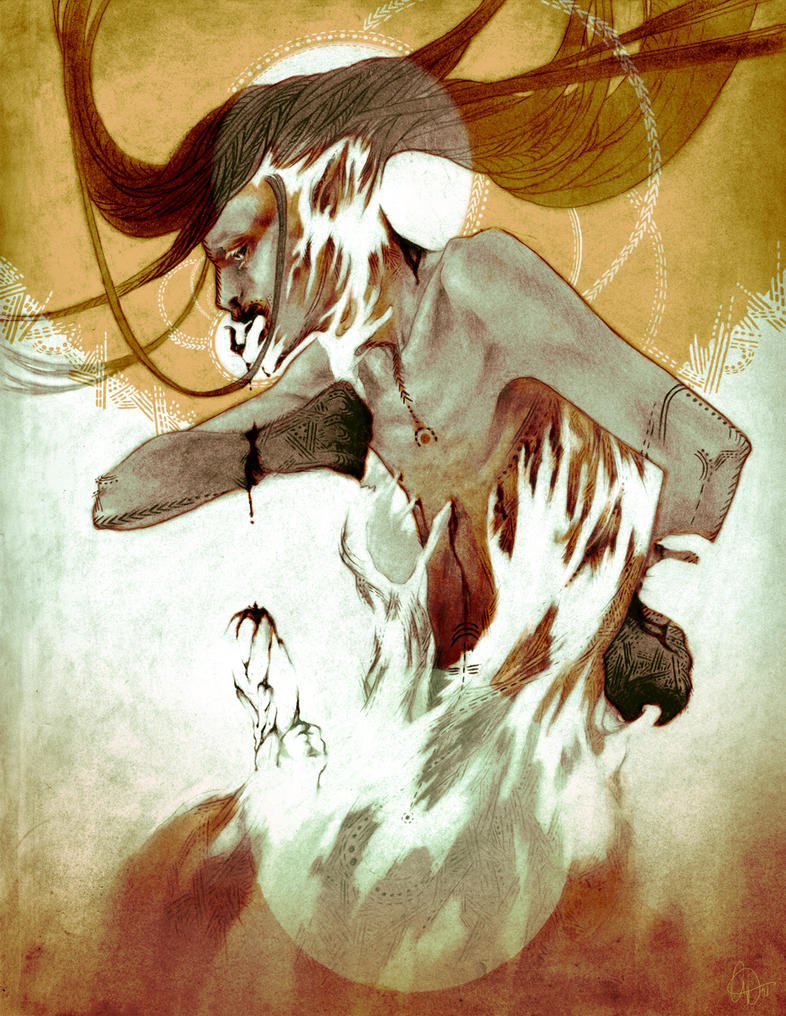
ENTPs (The Inventor) - Doppelgangers

For the purposes of this entry, I will consider Doppelgangers in the sense they are presented within D&D. Essentially, they are humanoids who have the power to change their appearance at will, appearing as any other humanoid they wish, even able to perfectly imitate the appearance of another if they chose to. In spite of this, however, they do not gain access to the mind of those they chose to appear as, so their resemblances, whilst convincing, can be as shallow as appearance.

I gave the ENTP this role because of their love of debate and their devil's advocate nature, which allows them to assume and reassume various positions in discussion, allowing them to effectively alter their argumentative "face" as they see fit, even if, sometimes, others are able to see through it. It is, however, difficult to see through the shapes they assume as ENTPs are known for their charisma and their social fluency, much as a Doppelganger would have to be able to adapt to whatever face he (or she) was wearing at any individual moment, so too can Inventors effectively reinvent themselves and present themselves different depending on who they are with or what mood they are in, more so than other types. Furthermore, ENTPs often suffer from boredom and like to "shake things up", constantly moving on and progressing, just as a Doppelganger might change their shape, having tired of living within their former one. This having been said, they possess, as do all types, a more stable inner core, a "true personality" which is much like the ENTP.


Image by Archlimit

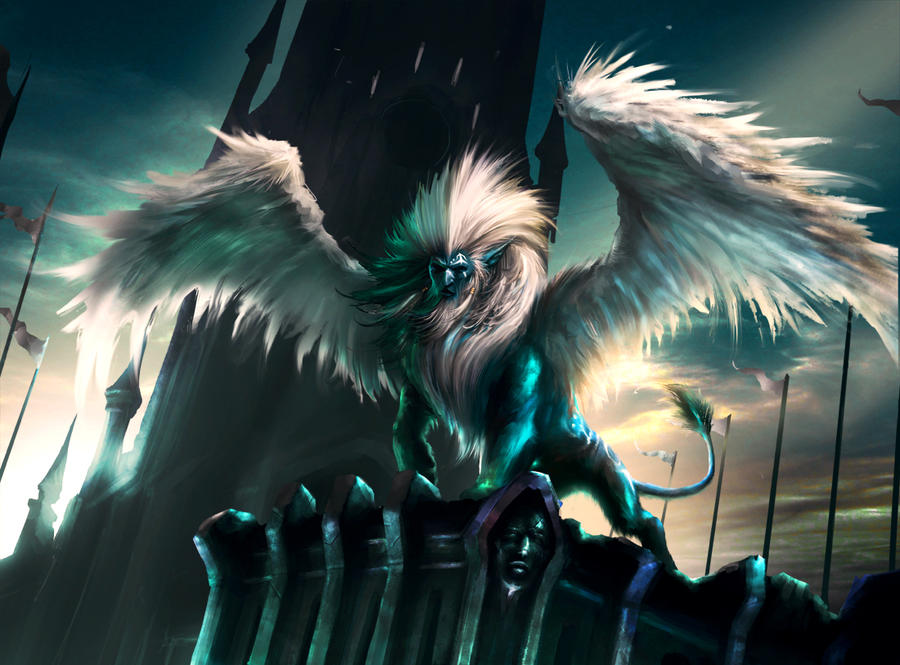
INTPs (The Architect) - Sphinxes

Just as INTPs possess great skill with abstract thought and problem solving, so too do Sphinxes. In much lore, these winged lions are presented as loving wordplay, puzzles and, above all, riddles. This is the central reason why I have compared them to the INTPs, who are open-minded by nature and often possess deep and powerful imaginations, which allow them to think exceptionally creatively. Furthermore, much like the Sphinxes who are known to sit or lie around all day, passing hours in deep thought, Architects can be withdrawn and even absent-minded at times, especially when their minds are going over some problem or complication. Architects can become truly devoted to their projects, which they only ever adopt out of a love for them (in most cases) and thus, like the Sphinxes, can become devoted to them at the expense of everything else. INTPs can, occasionally, become condescending, especially when they are speaking to those who cannot interface with their thinking as readily as they (which happens to be most people), and this is similar to the way in which Sphinxes can become bored by those who come across them, unless their visitors are willing to engage in a game of wit. 


Image posted by Science Soup

ENTJs (The Commander) - Will-o'-the-Wisp

Ah, we return to the infamous Commanders once again. Now, I know that many people, not to mention many ENTJs, would probably find the fit between their type and Will-o'-the-Wisps to be wanting in some way. It is within the ENTJ mindset to consider themselves to be something more robust and I would agree that this type is mentally hardy and certainly very capable. I am not, in assigning them the Wisps, arguing that this type could not easily fit many other, perhaps more traditionally fantastical, creatures, though I am saying that I think that they suits wisps equally well. 

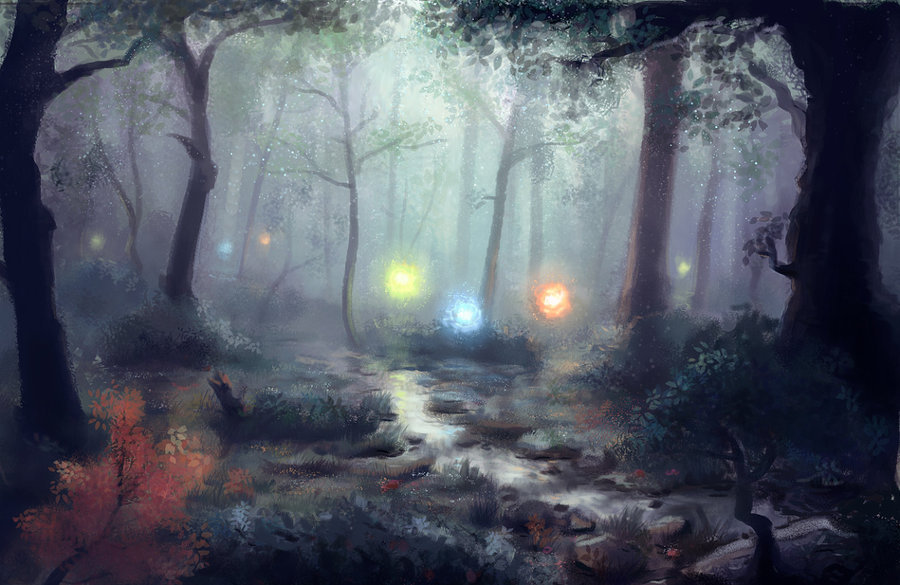
The central reason for my selecting this match is that ENTJs, as their namesake suggests, are strong-willed, leader oriented types, able to deal with both facts and abstract ideas in order to make quick decisions and fit them into a wider strategy or plan. This, to me at least, resonates with the image of the wisps appearing out of thin air to lead travellers and adventurers along a new path, for good or ill. After all, wisps have been known to lead wanderers to their doom for no reason other than a desire to do so. (ENTJs can, after all, be ruthless when they want to be). 

Furthermore, wisps are shown as being agents of a "hard fate" or a destiny which the character cannot ultimately chose to avoid. Likewise, ENTJs are known for their ability to hold their ground and be quite insistent, often leading to confrontations with other types (and other ENTJs) who do not like to be commanded, even by the Commander. Wisps will be listened to and refuse to be lightly ignored, much the same for ENTJs. Though wisps themselves tend to exist as relatively minor characters, this does not mean that they do not have a profound impact on that which goes on around them.


Thus ends the second Beastiary entry. In the third installment, I will be discussing the Sentinel types: ISTJs, ISFJs, ESTJs and ESFJs - Vampires, Valkyries, Dragons and Erinyes. 

Friday, 4 July 2014

Lilith: Redeeming a Legacy

Whether it is as the vampire "Goddess" (it's complicated) from True Blood or the first of all demons from Supernatural, the name Lilith has pervaded popular culture, especially the fantasy genre. Consistently, she is viewed as an "evil" character, as a corrupted being who seeks to tempt and lure protagonists into danger or perform some other great act of evil. Marvel adopted her not once, but twice, as the eldest daughter of Dracula and as the mother of all demons. In even more contemporary and young adult popular culture, there is a demon in Cassandra Clare's Moral Instruments named Lilith. 

Whenever a character appears in a book, a show or a game with this name, you know that they are going to turn out to be more than they might initially appear (take for example Lilith as she appears in Fable II or as she appears in something as far removed from Fantasy as Frasier) and you know that, more often than not, she will turn out to be your foe. Characters named Lilith are always female, always rebellious and almost always in possession of some dark power or part of some unholy hierarchy. 

Image posted by Sadisticupid

But who exactly is this figure of Lilith? Where does she come from?

The short answer is that Lilith appears as a highly mysterious and somewhat prolific figure in the Jewish mythologies of Assyria and Babylonia. Mentions of her are widespread and, as with many ancient figures, she seems to have a huge number of different incarnations According to most accounts, Lilith is a demon or somehow linked to demonic or dark forces. Often, she is associated with childbirth, as a negative influence who seeks to steal and devour children, or as a temptress who seduces and ultimately destroys men, thus preventing them from having children with mortal women.

According to some sources, once a child was born in a Jewish family, they would be given an amulet to wear, which would have been spelled in order to protect them from Lilith. This was often worn until the child was circumcised, at which point they were seen as protected by God through the Jewish Covenant. 

So, from this reading, we have an evil, monstrous figure indeed, one which deserves the legacy she has received: appearing throughout our culture as a seductress and corrupter, as a demon, a devil or a witch. And yet, this is not the only reading of the figure of Lilith, there is another...

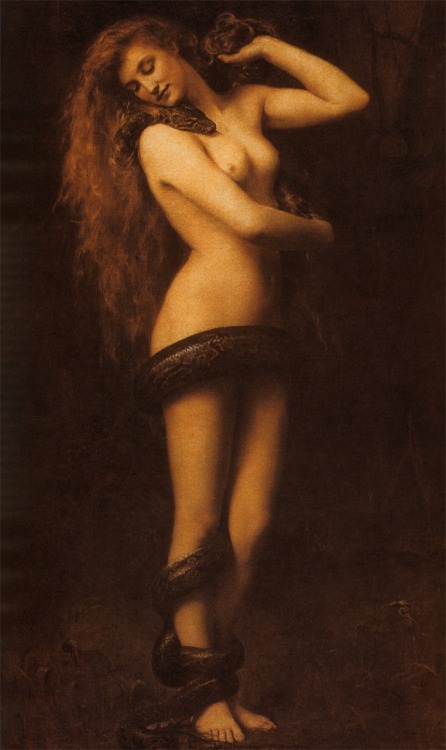
Painting by John Collier

According to this second reading of Lilith, the earliest evidence of which is to be found in the Alphabet of Sirach, Lilith is no demon. In fact, she is the wife of Adam, as in Adam and Eve. Furthermore, she is Adam's first wife and, unlike Eve, she was not created from Adam's rib after he was created, but at the same time as him and from the "earth". Naturally, having been made from the same stuff as her husband, Lilith considered herself, and rightly so, Adam's equal and therefore she refused to submit to him. Thus, according to the legend, she leaves him and the Garden of Eden forever, refusing to return and somehow ends up mating with the archangel Samael (in religious texts, these things just seem to happen). 

We can read Lilith as a female version of Lucifer, though I would argue that the crimes of Lucifer are far greater than those of Lilith. True, both are defying what is seen as the will of God, a complex concept to be sure, but whereas Lilith is asserting that she is equal to Adam, Lucifer asserted himself as the equal to God. Hence, Lucifer is punished with damnation, whereas the story as to what happens to Lilith after her "rebellion" becomes immediately unclear.

So, the question I shall ask is this: if we are to read the story of Lilith in this second way, why does our culture continue to connect her name with evil and corruption?

If Lilith's only crime is that she, as a woman, wanted to be equal with Adam, representative of man, what is so evil about it? I think that we can find an answer within traditional, particularly religious, attitudes to gender and sexuality, attitudes which our culture, in spite of numerous assertions to the contrary, have still failed to entirely shake.

The rebellion of Lilith against Adam can be easily read as the threatening of masculine power by the feminine. She disobeys him, refuses to submit to him. This is her original crime and it is this transgression that has led to her demonisation. By refusing to obey her husband and perhaps because she is depicted as copulating with an Archangel, she is consider a tempter and a corrupter. True, Samael is not considered entirely innocent, but the majority of the blame is placed on Lilith, for she is the anomaly: a rebellious woman. 

Image posted by Caligo Chaos Reigns
If we harken back to the two traditional roles given to women within literature, we can see more easily how she is so easily likened to demons, devils and the like. According to a traditional attitude towards literary woman, one which is, thankfully, heavily outdated yet, unfortunately, still relevant today, women fit into the category of the Lady or the Whore. Ladies are noble, delicate, subservient the ultimate example of what woman should be according to traditional gender roles. They are significantly desexualised in that they do not participate in such activity, certainly outside of the marital bed, but this only serves to make them more desirable to the male characters around them. Whores, however, are seen as the complete antithesis to the traditional role of women. They are disobedient to or outside of, or at least on the fringes of, the patriarchal structure, and sexually free. This leads to the corruption of their image, the corruption of Lilith's image.

We can see, with no shortage of clarity, how the traditional has influenced modern representations of Lilith. Whilst she is, undoubtedly, shown as a tempter, she is almost always cast in traditionally female roles. In Supernatural, Lilith is the first demon, making her effectively the mother of all demons as well as the bride or daughter of Lucifer. The Lilith of True Blood is the mother of vampires and the bride of God. Modern representations of Lilith within fantasy all seem to buy into this conception of her as a demon and temptress, but also as a traditional woman.

What I am saying, then, is that, whilst I have no problem with the name of Lilith being used for demonic and seductive characters (I still think that such representations can be interesting, original and entertaining) I do think that her namesake can be used for a lot more. Yes, Lilith has diabolic connotations and those can be interesting to explore. But still, this alternative interpretation of her character and what she means within Jewish mythology means that characters named for her should not be eternally limited to the role of the harbinger of darkness and desire.

Interestingly enough, her namesake has been used in one manner, though not in the form of a character. There exists a feminist, Jewish magazine which uses her namesake to convey their message of respect for woman, their desire for equality as well as reconciliation with Judaism. Lilith is a name with many connotations and much potential and it should not be confined to the demonic.


LILWi14-Cover
Cover of the latest issue of Lilith