Showing posts with label Skyrim. Show all posts

Thursday, 10 July 2014

Aedra and Daedra and Moth Priests, Oh My! - Religion in the Elder Scrolls

Though they have been with us for a while now, the Elder Scrolls games gained a huge amount of prestige with their 2011 release of Skyrim, the fifth instalment in the saga and one of the most immersive and beautifully rendered games I have ever played. These games are all set within the same world, though they have each tended to restrict the experience to a single region of this wider world, as well as allowing many years to have passed within the world between each game.

Something which has remained consistent, yet relatively in the background, throughout the games is the inclusion of a religious element, as is to be expected when a huge selling point for the games is cultural immersion. I find religion a fascinating topic and this applies equally to the real world religions and to religion as they it is represented in fiction and thus I was interested in thinking about how the religions within the Elder Scrolls are constructed, what elements from history have been taken and been made fictional as well as some of the commentary that one might be able to take from certain readings of them.
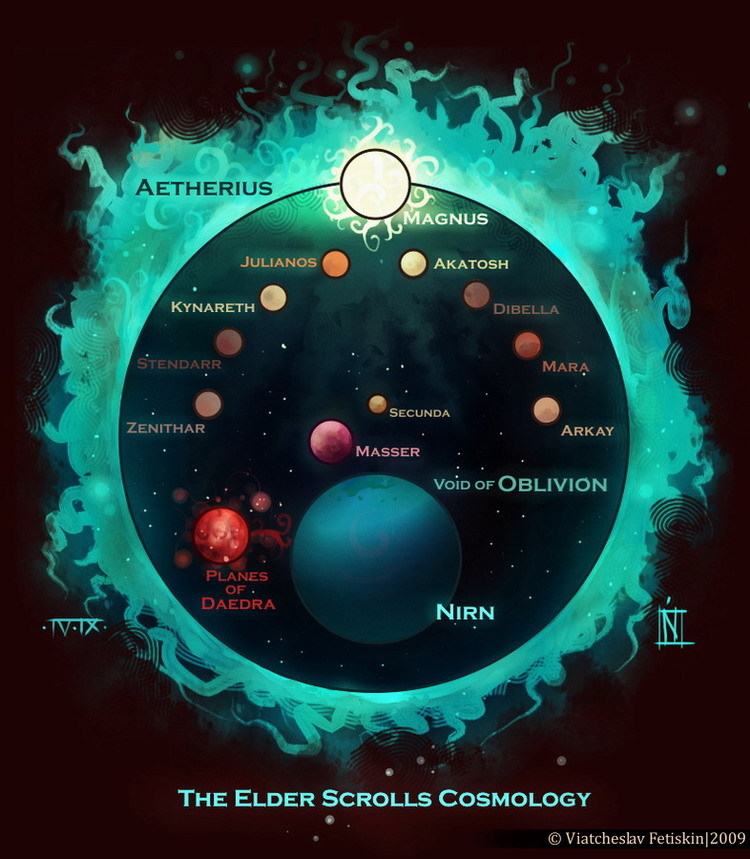
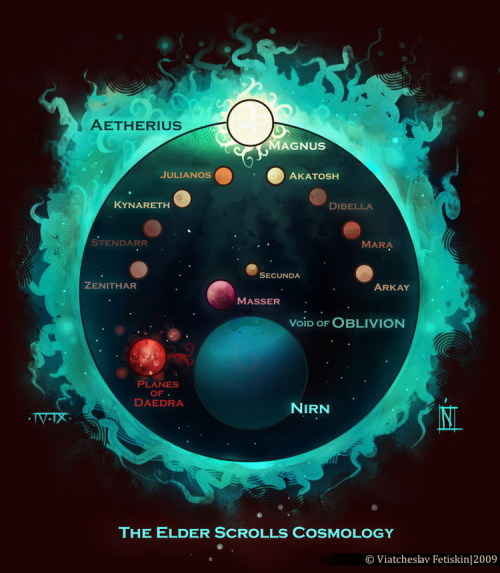
Image posted by Illith-Anthonar

Aedra and Daedra 

The two primary religious groups within the more recent games are the followers of the Divines (or the Aedra) and the cultists of the Daedric Princes (the Daedra). From the outset, we can note that the former is an organised religion, with Churches and formal temples and clerical hierarchies, as well as formalised religious texts and practices, whereas the latter (for the most part) are portrayed as being less strict, more wild and informal.

Without much difficulty, these can map onto Christianity and the amorphous Paganism against which it is often framed, a reading which is further supported by the former’s view that the latter are dangerous and often deserving of death for their practices. Interestingly, Daedra worship links nicely with the concept of Paganism as neither of them can be clearly defined into a neat little box. Just as the term Pagan can cover a vast range of cultures and religious / philosophical positions, there are many Daedric princes, each with very different practices and attitudes, and whilst we can argue that there are common threads running between the Daedra, there are also similar commonalities running through various forms of Paganism, otherwise the term would have no meaning whatsoever.


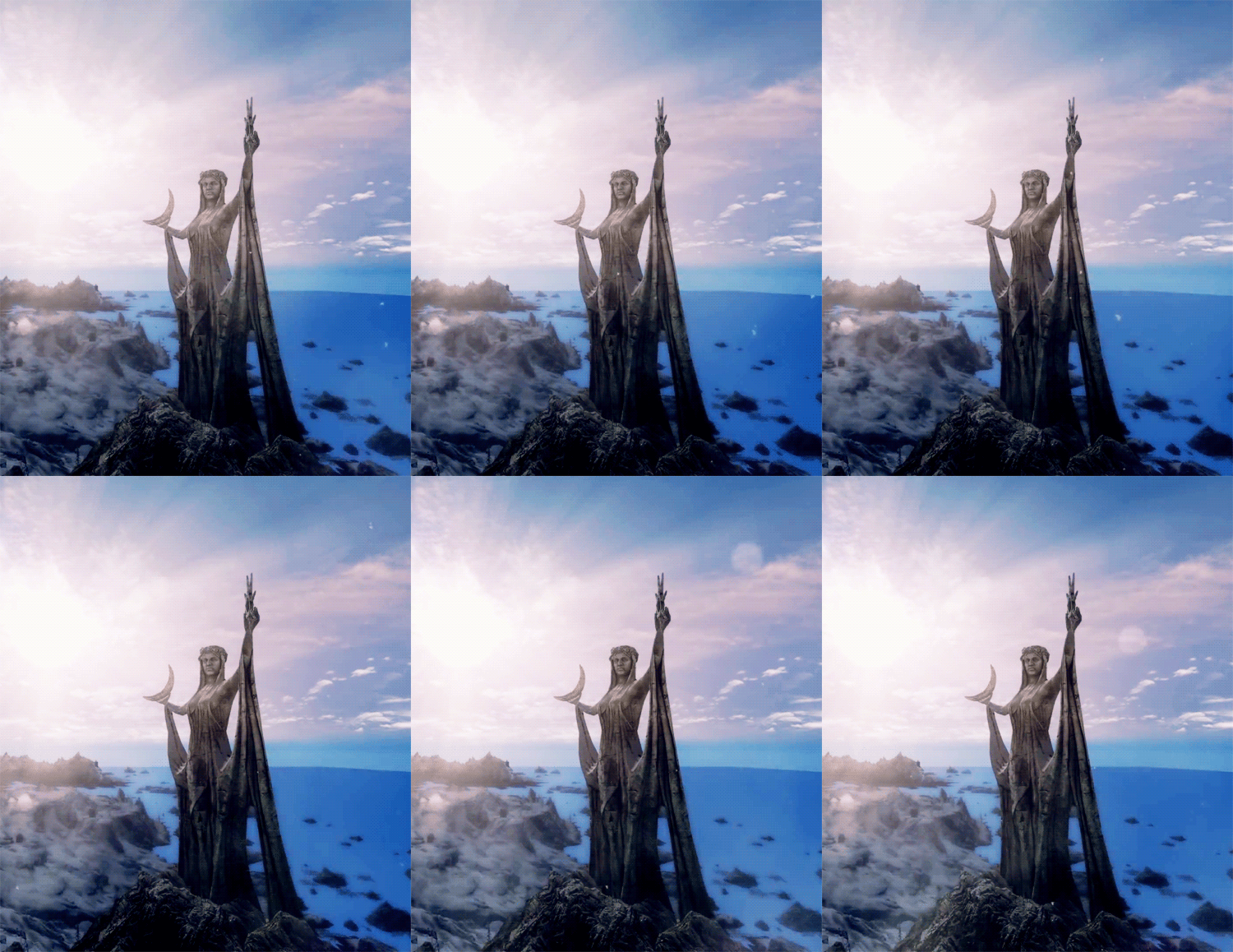
Furthermore, one can clearly see parallels between Christianity and the Aedra, as these Gods very rarely appear in the game (and when they do, they are not so much characters as spectacles), which reflects the traditional Christian conception of the way in which Gods interacts with the world as being either as a background influence, only very rarely making his will directly manifest in the form of miracles. This conversely applies to the Daedra, who directly speak to mortals and who take an overt and active interest in the moral world, which is much more in line with certain Pagan attitudes towards the Gods, such as the attitudes which are held by the Greeks and which are made evident in Homer's Iliad and Odyssey. 

Image posted by FusRoDamnGurl

The relationship between the followers of the Aedra and the Daedric cultists also mirrors the historical relationship between Christianity and Paganism. In short, the two are at odds, though they are evidently not complete opposites, with elements mingling in a grey, in between area and they evidently share a history. Often, followers of the Daedra are tolerated, if not welcomed, though they are seen as being more primitive. Though there is obvious hostility, for a branch of the church, the Vigilants of Stendarr, exist to deal out justice, which specifically includes the hunting of Daedra and their followers. Evidently, this is a reference to the concept of a religious inquisition, often used not to hunt those of other faiths, but all those who do not uphold the faith in question. 

Traditionally, the God of Christianity is conceived of as a perfect being, one who is associated with any concept which can be deemed noble. Likewise, the domains of the Nine Divines are all concerned with lofty concepts such as Time, Love, Logic, Work, Nature etc. These are transcendent Gods, whose followers are focused on a realm beyond their own. On the other hand, the Daedric princes rule over domains such as Conspiracy, the Hunt, Madness, the Outcast, Domination, etc. We can see clearly that they share some concepts (there is an Aedra of nature (Kynareth) and a Daedra of the Hunt (Hircine)), though they cover these in different ways. Kynareth promotes the beauty of nature and unity with it, whereas Hircine is concentrated in the beastial nature of all creatures and the chaos within the wilderness. The trend suggests that the Daedric princes are far more mortal, representing the more practical elements of the world, in all its ugliness rather than the transcendental concepts, though this is not to say that the two are mutually exclusive.
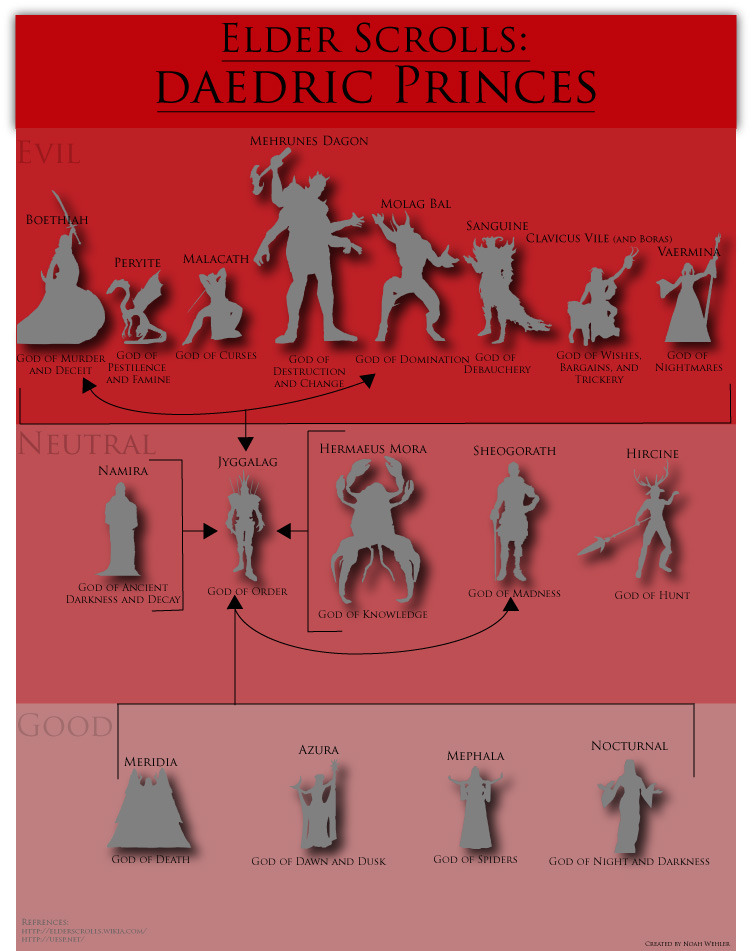
Image posted by Stuff That Art Does

The Meaning of Godhood

Interestingly, the Elder Scrolls series can be used to allow us to reflect on what actually makes a God. At the centre of this discussion are the Tribunal, a group of three, ancient elves who managed to obtain immortality and great power through manipulating an artefact known as the Heart of Lorkhan, which was taken from Lorkhan, an Aedra himself, for tricking the other Gods into creating the world. Essentially, through harvesting the divine energy left within the heart, the three became "living Gods". 

Ultimately, however, throughout the course of Morrowind's central plot, the three are ultimately stripped of their powers and their religious following, with one of their number, Vivec, even suggesting that they should be considered Saints and Heroes rather than Gods in their own right.

What is suggested here is that, in spite of their using a source of power that is linked to an Aedra and in spite of their extensive power and immortality, the Tribunal are not truly Gods. A God is not constituted by his power, or by his following, but by his very essence and nature. The Aedra are Gods because they are powerful spiritual beings whose power was used to create the world and all living things within it. Both their nature and their actions give them the title, not their power.

Thus, whilst the Daedric princes are also powerful, they cannot be rightly called Gods. Sure, they are also spiritual beings, but they have no connection to the mortal world, and a rumoured to have been born from a force which hates it with a deep-rooted passion. They, like the Tribunal, have power and a following, but they cannot be correctly called Gods. 
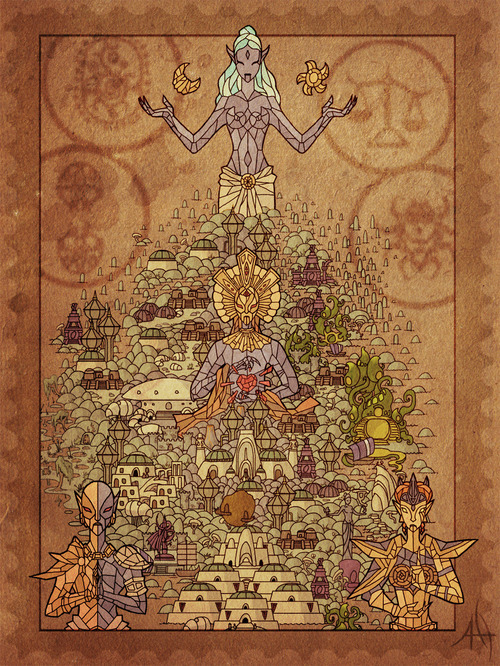
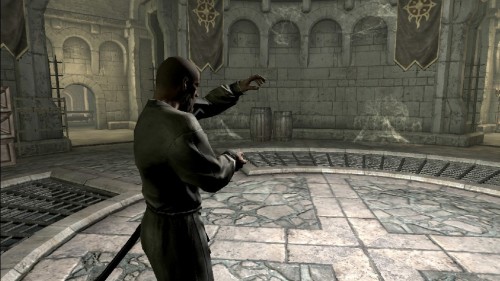
Image posted by C0nn3ct

The Moth Priests

A final point I wish to raise is in connection with the Moth Priests. For a series named the Elder Scrolls, the Scrolls themselves, which are used to contain prophecies, rarely seem to surface in many of the plot lines. The nature of these scrolls is interesting, as they are supposed to represent the idea of divine knowledge which, whilst it can be somewhat understood, can never be fully comprehended and which costs much. In order to read the scrolls, one must prepare in accordance with the rituals of the Moth Priests, with those who do not are unable to read the scrolls and suffer for the attempt. Yet even with the utmost preparation, reading the scrolls ultimately results in blindness.

The initial, and by no means wrong, reading lends itself to the idea that there exists knowledge outside of the realm of mortals that we cannot freely or properly understand. It highlights that knowledge comes with a price and that there are some things which will always be beyond our ken, the attempt to bring them into our understand results in a terrible loss.

However, another reading could argue that what is truly being represented is the idea that fervent devotion to a cause or to an idea, such as an organised religion or a personal philosophy, can result in an inability to clearly perceive the world around you. Through their academic devotion to the scrolls, the Moth Priests are ultimately unable to actually interact with the world in which they live, due to the price they have paid. So fixated on the future, on the prophecies within the scrolls, they become estranged from the present. 
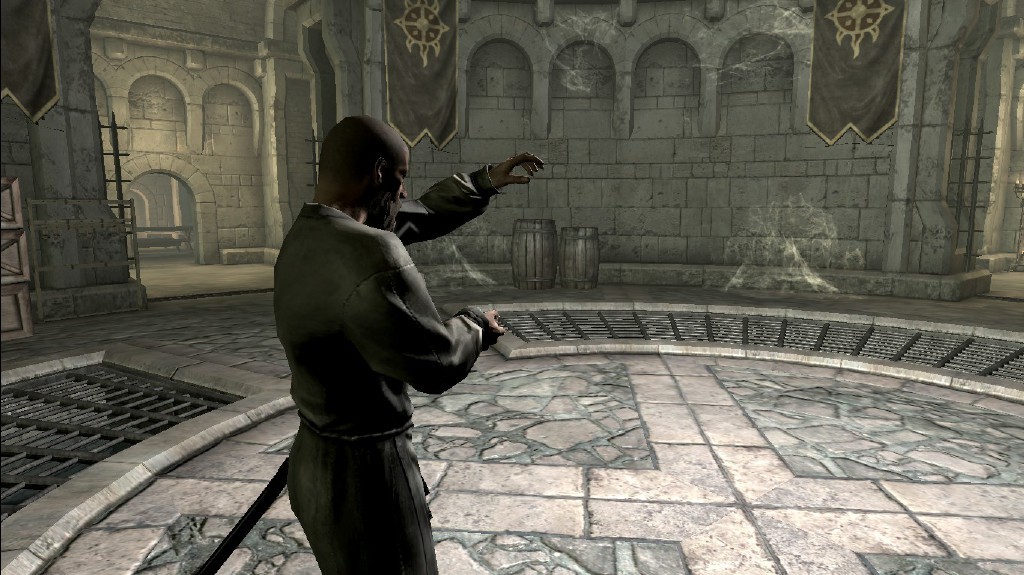
Image posted by LizardBorn

So that does it for my reading of religion within the Elder Scrolls! Thanks for reading!

Sunday, 29 June 2014

Death and Desire: Vampires and the Seven Deadly Sins

Though I have some more MBTI-related content in mind, I have devoted a lot of time to that over the past few months, so I think it is time for a little break.  

So recently, in anticipation of the final season next month, I have been using the SkyTV Box Set service to watch True Blood. Though not perfect, I have enjoyed the series so far (I am currently midway through the fifth series). This combined with the Steam Summer sale, which has allowed me to download the Skyrim DLC Dawnguard, has meant that I have been assailed with Vampires, both by the TV and on my computer screen.

In immersing myself in both of these top-quality pieces of entertainment, I have begun to reflect upon the Vampire mythology and what thinking about them might be able to say about us, as human beings, especially where the dark portions of our psyche might be concerned. When it comes to discussing the dark motivations of mankind, a good place to start is with the system of the Seven Deadly Sins, used in some branches of Catholic Theology. 

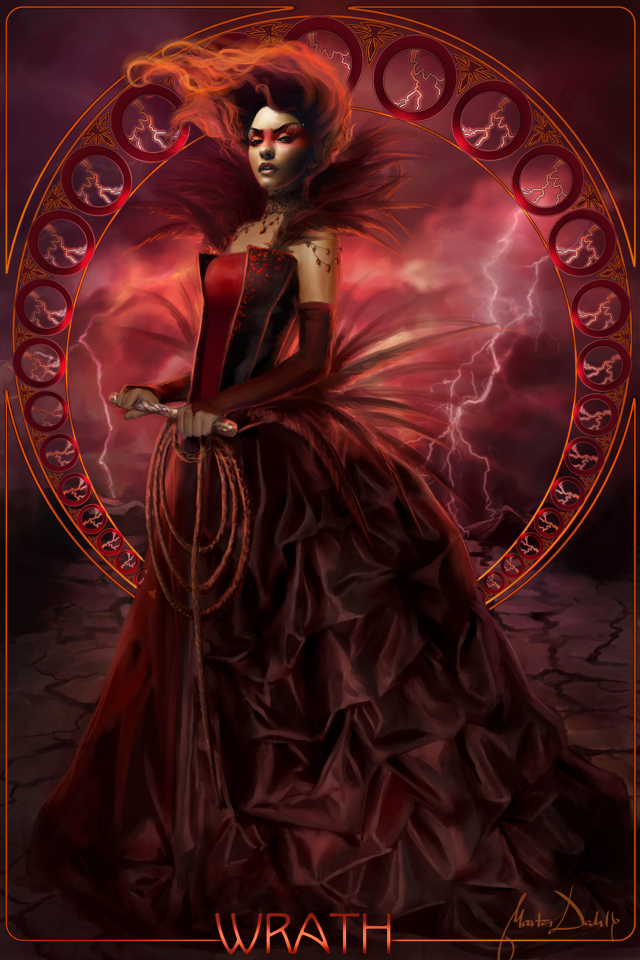
Image by dahlig

For those unacquainted with the system, it seeks to categorise human misconduct into one of seven categories, in order to provide moral clarification for those wishing to avoid transgressing. Whilst Catholicism describes the sins in reference to God, one need not be a believer in order to make use of the system, for they can have a role in a secular ethic, though that is another blog entry entirely. 

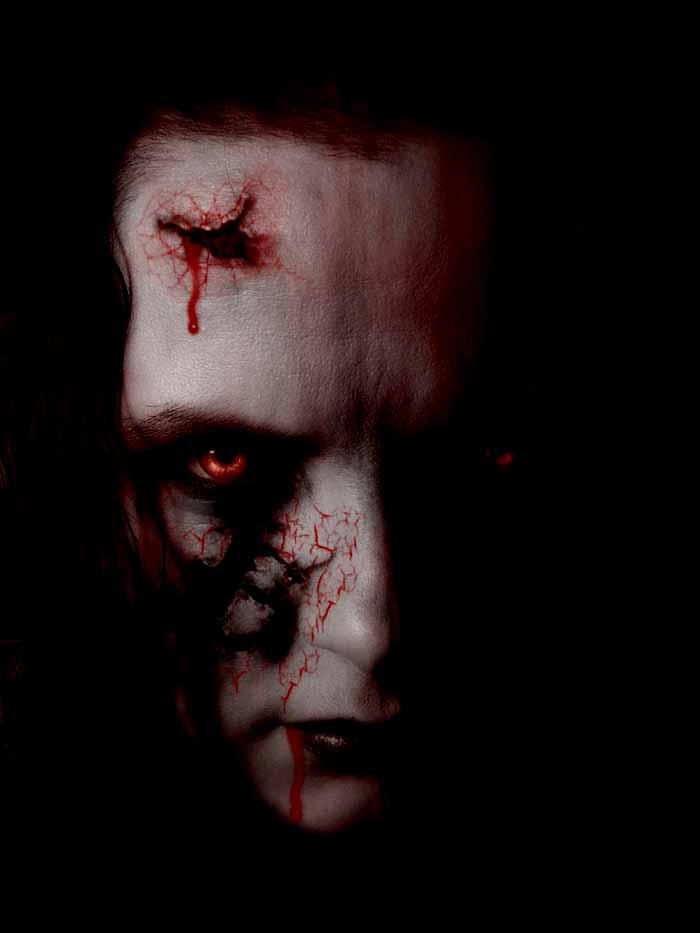
Vampires in many ways embody several of these cardinal sins, though naturally different representations provide different emphases. Of course, there are a multitude of varying vampires in popular culture (not to mention classical literature and folklore), meaning that one could immediately be sceptical of trying to discuss vampires in general. But there are certain common traits when it comes to Vampires, and it is those traits which I shall be using above those attributed to them by any particular incarnation.

Image by dahlig
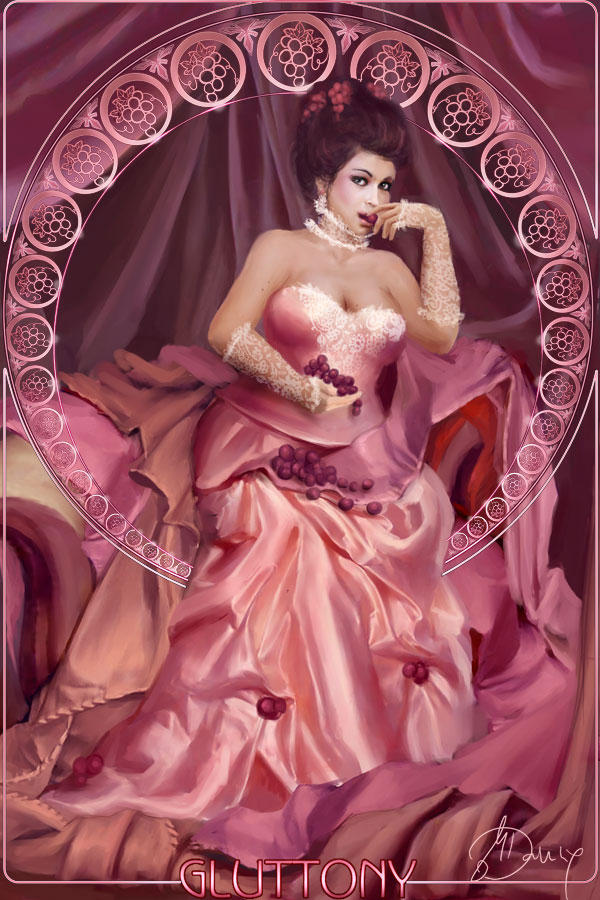
Gluttony

Vampires feed on blood. That is perhaps their most central quality, considered to be even more intrinsic to them than, for example, their inability to walk in sunlight. More modern representations of Vampires include examples of those who can walk around during the day, but none, or at least not one of which I am aware, has even shown a vampire who does not require blood in one way or another.

Furthermore, the vast majority of Vampires are defined by their need and desire for it. Without the blood (in most representations) they would die, true, but they are more often than not depicted as finding the act of drinking the blood of the living as exhilarating. Defining Vampires by their desire to consume endless amounts of blood has clear links to the cardinal sin of gluttony, which can be defined in several ways. The overconsumption of food or drink is the most common definition and, whilst some Vampires may need to consume vast quantities of blood, the fact that their consumption is excessive when compared to that of a human is enough to link their appetite to gluttony. 

Furthermore, their hunger is more often than no depicted as something that is very hard to control, even if the Vampire in question is in possession of an extremely strong will. Should the temptation become too much, their humanity leaves them, as do their wits and they enter into a frenzy to consume and drink more and more. This goes beyond the sin of gluttony and hints at something more primal: the fact that humanity retains something of their original animalistic nature beneath the surface. 

This leads us to the second sin...

Image by Procrust
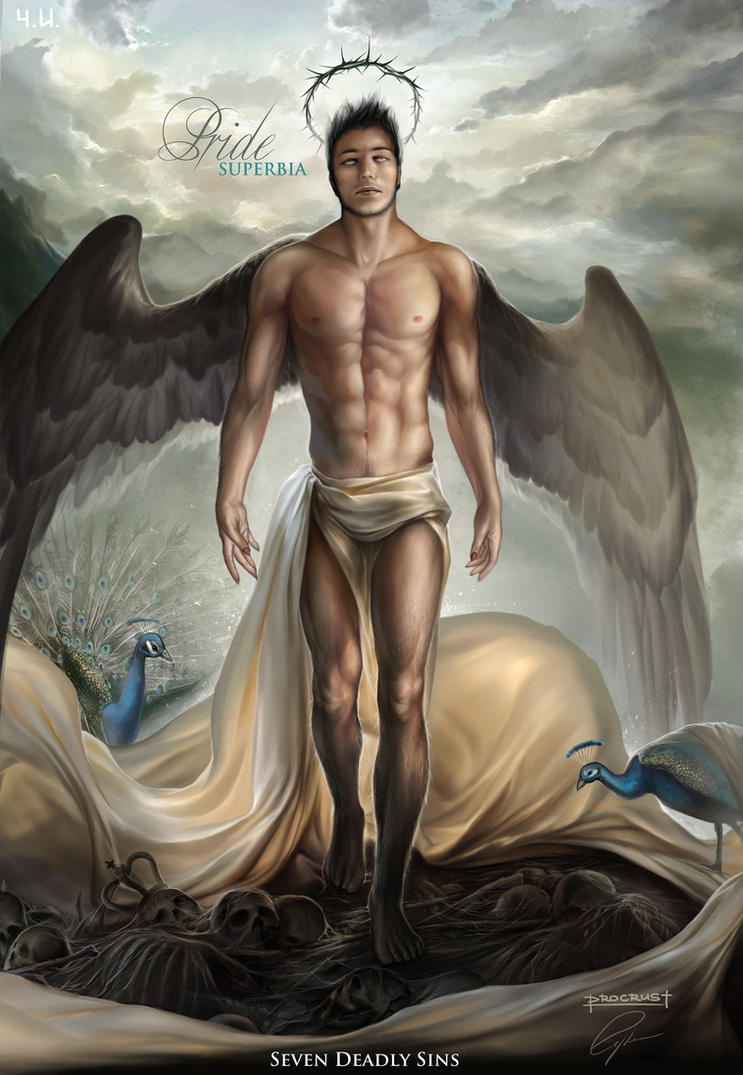
Pride

The so-called route of all other sins, Pride is perhaps one of the most ephemeral and difficult to define of the sins, though this is what makes it so insidious, and so difficult to control. When the sins are used as a story telling device, Pride is often treated as being higher in the hierarchy than the other sins and often gains its strength from a pathological ability to manipulate and deceive its enemies. 

The first Vampiric quality which can be tied to this deadliest of sins is the hunger for blood, though this depends on the Vampire in question. On one reading, the attempt to control such a hunger could be seen as an arrogant assumption that an individual is able to change their own fundamental nature, though such a reading could be replaced with one which would cast the attempt at self-restraint in a far more heroic or poetic light. Furthermore, not all Vampires strive to control their hunger, with many of them, certainly in settings where the Vampires are exclusively villains, instead give in to their infinite hunger. 

Secondly, is the Vampiric quality of immortality. A staple of the Vampiric legends is that they are undead immortals, able to live endlessly unless they are slain, the method of which depends on the story. Indeed, in most representations, Vampires are often depicted gloating about their deathlessness, regularly doing so whilst degrading human characters through labelling them as little more than food or cattle. To claim immunity from death, to oppose what is often considered to be the natural order, that seems to be to fit perfectly into the category of Pride. 

Of course, one could easily turn the narrative on its head, instead claiming that Vampiric immortality is a great human achievement, but not one which is overly proud. I would personally disagree, for whilst there may be humble Vampire characters (I am in no way claiming that any of these sins apply to all Vampires, only to the concept of Vampirism in general), the act of rejecting ones own mortality through becoming undead seems to me to be bound up in the concept of Pride.


Image by Procrust
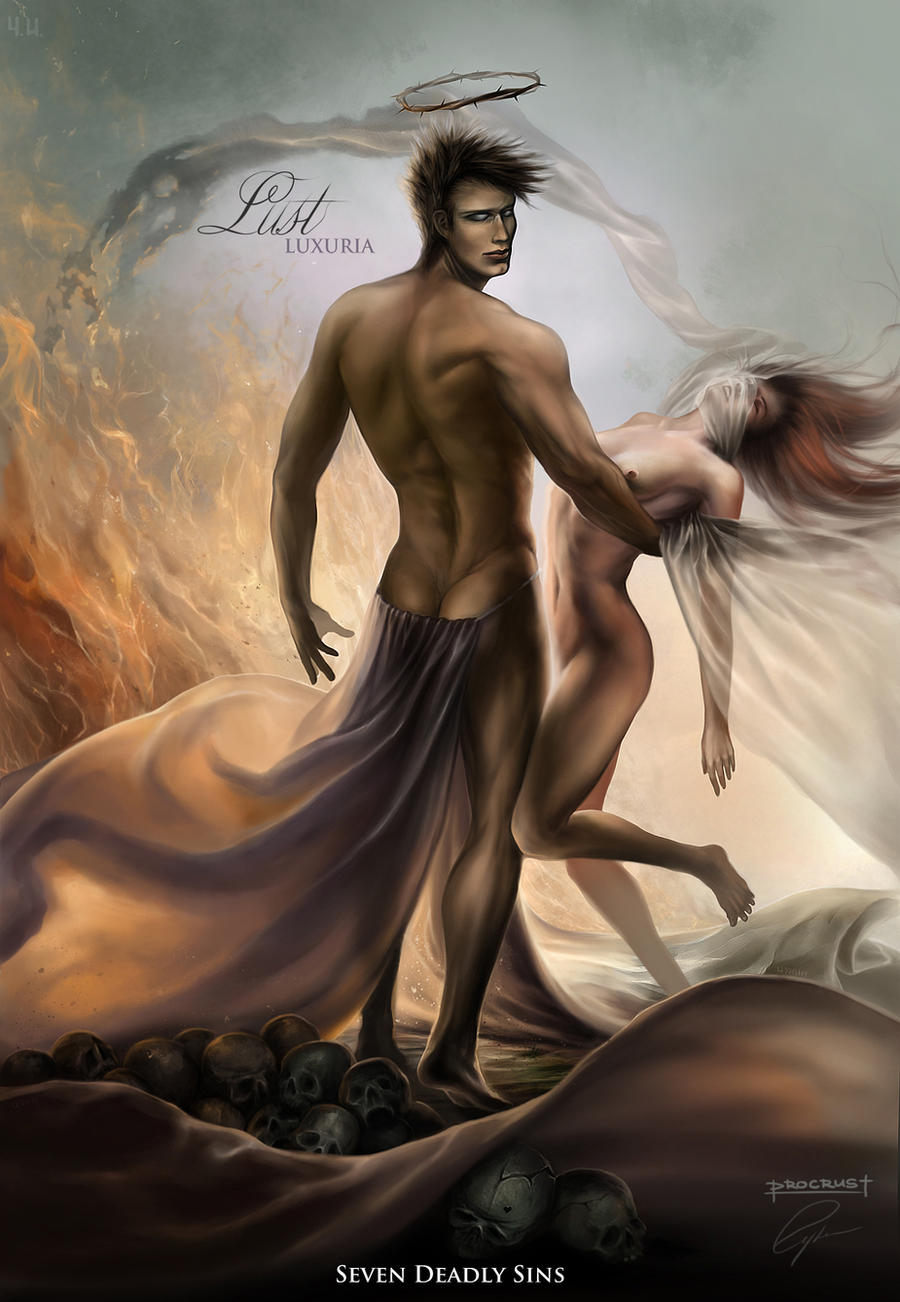
Lust

Our final sin will come as no surprise to anyone who has seen anything produced upon Vampires in the last decade, for modern representations of Vampires seem to be unable to avoid turning them into beautiful, and seductive, far removed from the more traditional legends. A whole subgenre of literature named "paranormal romance" has sprung into being in recent years, rocketing to popularity with the polarising Twilight Saga and its like. So many of these romances claim to be exploring how Vampires, modern culture and modern relationships would interact, though most only manage to place the three elements together, before then descending into works which focus over-much on sexualising these creatures.

Through representing them as eligible for romantic attraction, though through persisting in representing them as outsiders and rejected (or, in the case of True Blood, making the task of their integration a central feature of the plot), they are transformed into paramours and used to represent forbidden desires. Lust as a sin was, in some traditional interpretations, intended to include any kind of sexuality, outside that of the marital bed. In a more modern and liberal understanding of it, it would be better to include certain kinds of deviant sexualities (with animals or corpses, for example) as well as overindulgence in otherwise health sexual activity. Vampires are literally dead. They are fundamentally outside of the norm, they are the forbidden, the tainted. This is how they link to lust. 

It may be the case that the sexualisation of Vampirism is something that can be solely blamed on modern culture, though I think this would be an overly simplified approach. There are a large number of traditional Vampire legends which speak of supernatural seductive abilities, though very few of these actually portray the Vampires as being attractive, instead saying that they needed to rely upon their supernatural powers in order to trick mortals into becoming their willing prey. Traditionally, they were less sexualised, though even in Bram Stoker's Dracula, there is a hint of desire between Mr Harker and Dracula's brides. So perhaps we can argue that Vampires are more sexualised in modern culture than they used to be. But then again, isn't everything?


So there you have it, some examples as to how Vampires can tell us of the darker portions of humanity. Naturally, this is in no way comprehensive, and there is a lot more I could say on this topic. Perhaps I shall, but that is for another entry. I hope you enjoyed reading.

Image by ro0t