Showing posts with label Supernatural. Show all posts

Friday, 4 July 2014

Lilith: Redeeming a Legacy

Whether it is as the vampire "Goddess" (it's complicated) from True Blood or the first of all demons from Supernatural, the name Lilith has pervaded popular culture, especially the fantasy genre. Consistently, she is viewed as an "evil" character, as a corrupted being who seeks to tempt and lure protagonists into danger or perform some other great act of evil. Marvel adopted her not once, but twice, as the eldest daughter of Dracula and as the mother of all demons. In even more contemporary and young adult popular culture, there is a demon in Cassandra Clare's Moral Instruments named Lilith. 

Whenever a character appears in a book, a show or a game with this name, you know that they are going to turn out to be more than they might initially appear (take for example Lilith as she appears in Fable II or as she appears in something as far removed from Fantasy as Frasier) and you know that, more often than not, she will turn out to be your foe. Characters named Lilith are always female, always rebellious and almost always in possession of some dark power or part of some unholy hierarchy. 

Image posted by Sadisticupid

But who exactly is this figure of Lilith? Where does she come from?

The short answer is that Lilith appears as a highly mysterious and somewhat prolific figure in the Jewish mythologies of Assyria and Babylonia. Mentions of her are widespread and, as with many ancient figures, she seems to have a huge number of different incarnations According to most accounts, Lilith is a demon or somehow linked to demonic or dark forces. Often, she is associated with childbirth, as a negative influence who seeks to steal and devour children, or as a temptress who seduces and ultimately destroys men, thus preventing them from having children with mortal women.

According to some sources, once a child was born in a Jewish family, they would be given an amulet to wear, which would have been spelled in order to protect them from Lilith. This was often worn until the child was circumcised, at which point they were seen as protected by God through the Jewish Covenant. 

So, from this reading, we have an evil, monstrous figure indeed, one which deserves the legacy she has received: appearing throughout our culture as a seductress and corrupter, as a demon, a devil or a witch. And yet, this is not the only reading of the figure of Lilith, there is another...
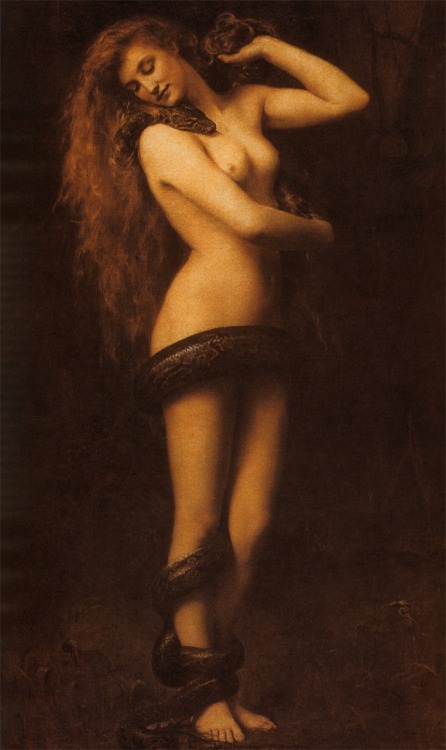
Painting by John Collier

According to this second reading of Lilith, the earliest evidence of which is to be found in the Alphabet of Sirach, Lilith is no demon. In fact, she is the wife of Adam, as in Adam and Eve. Furthermore, she is Adam's first wife and, unlike Eve, she was not created from Adam's rib after he was created, but at the same time as him and from the "earth". Naturally, having been made from the same stuff as her husband, Lilith considered herself, and rightly so, Adam's equal and therefore she refused to submit to him. Thus, according to the legend, she leaves him and the Garden of Eden forever, refusing to return and somehow ends up mating with the archangel Samael (in religious texts, these things just seem to happen). 

We can read Lilith as a female version of Lucifer, though I would argue that the crimes of Lucifer are far greater than those of Lilith. True, both are defying what is seen as the will of God, a complex concept to be sure, but whereas Lilith is asserting that she is equal to Adam, Lucifer asserted himself as the equal to God. Hence, Lucifer is punished with damnation, whereas the story as to what happens to Lilith after her "rebellion" becomes immediately unclear.

So, the question I shall ask is this: if we are to read the story of Lilith in this second way, why does our culture continue to connect her name with evil and corruption?

If Lilith's only crime is that she, as a woman, wanted to be equal with Adam, representative of man, what is so evil about it? I think that we can find an answer within traditional, particularly religious, attitudes to gender and sexuality, attitudes which our culture, in spite of numerous assertions to the contrary, have still failed to entirely shake.

The rebellion of Lilith against Adam can be easily read as the threatening of masculine power by the feminine. She disobeys him, refuses to submit to him. This is her original crime and it is this transgression that has led to her demonisation. By refusing to obey her husband and perhaps because she is depicted as copulating with an Archangel, she is consider a tempter and a corrupter. True, Samael is not considered entirely innocent, but the majority of the blame is placed on Lilith, for she is the anomaly: a rebellious woman. 
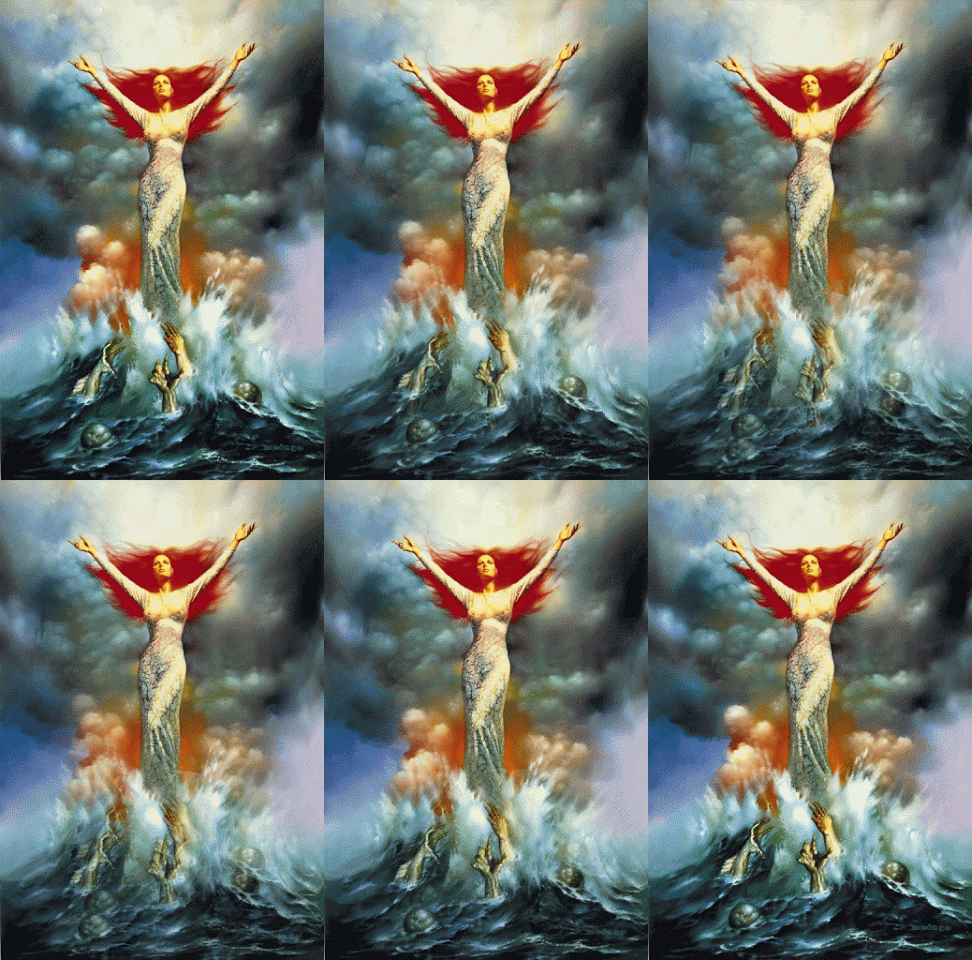
Image posted by Caligo Chaos Reigns
If we harken back to the two traditional roles given to women within literature, we can see more easily how she is so easily likened to demons, devils and the like. According to a traditional attitude towards literary woman, one which is, thankfully, heavily outdated yet, unfortunately, still relevant today, women fit into the category of the Lady or the Whore. Ladies are noble, delicate, subservient the ultimate example of what woman should be according to traditional gender roles. They are significantly desexualised in that they do not participate in such activity, certainly outside of the marital bed, but this only serves to make them more desirable to the male characters around them. Whores, however, are seen as the complete antithesis to the traditional role of women. They are disobedient to or outside of, or at least on the fringes of, the patriarchal structure, and sexually free. This leads to the corruption of their image, the corruption of Lilith's image.

We can see, with no shortage of clarity, how the traditional has influenced modern representations of Lilith. Whilst she is, undoubtedly, shown as a tempter, she is almost always cast in traditionally female roles. In Supernatural, Lilith is the first demon, making her effectively the mother of all demons as well as the bride or daughter of Lucifer. The Lilith of True Blood is the mother of vampires and the bride of God. Modern representations of Lilith within fantasy all seem to buy into this conception of her as a demon and temptress, but also as a traditional woman.

What I am saying, then, is that, whilst I have no problem with the name of Lilith being used for demonic and seductive characters (I still think that such representations can be interesting, original and entertaining) I do think that her namesake can be used for a lot more. Yes, Lilith has diabolic connotations and those can be interesting to explore. But still, this alternative interpretation of her character and what she means within Jewish mythology means that characters named for her should not be eternally limited to the role of the harbinger of darkness and desire.

Interestingly enough, her namesake has been used in one manner, though not in the form of a character. There exists a feminist, Jewish magazine which uses her namesake to convey their message of respect for woman, their desire for equality as well as reconciliation with Judaism. Lilith is a name with many connotations and much potential and it should not be confined to the demonic.
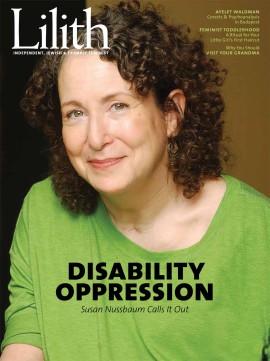

LILWi14-Cover
Cover of the latest issue of Lilith

Friday, 27 June 2014

ENFJ: The Giver

So the time has finally come, we have reached the last entry in this MBTI series. A lot of ground has been covered over the past fifteen entries, and a huge number of characters. I think it has been interesting applying MBTI to these particular series, and, personally, I think it has enabled me to look at some of the characters in new ways. In the future, I may review the decisions I have made, in terms of where I placed individual characters, and perhaps I will disagree with some of the choices, but for now, let us turn our attention to the final type: The Giver.

The primary quality of the Giver is, unsurprisingly, a compassionate, tolerant attitude to others, bestowing them with a high degree of altruism, sometimes a little too much. ENFJs do a lot for other people, occasionally at their own expense, and are often the kind of person you can depend on to be there when they are needed. Their compassion stems from an ability to understand other people and connect with them deeply on an emotional level. It is quite possible that the Giver is not quite aware of their natural ability, for it can come so readily, that an ENFJ might have never stopped to consider it. This natural ability with people bestows the Giver with heightened charisma and makes them well-suited for leadership positions, though it can mean that the self-confidence and esteem of the ENFJ can change greatly depending on present company. Like all those types who are rules by F rather than T, ENFJs can suffer from making what might be considered poor decisions from a logical point of view. Such is the price for such acute emotional intelligence. ENFJs are highly idealistic and this can lead to great sensitivity, especially when it comes to their inability to meet such lofty standards.


Ellen
Possessing every quality on the list, Ellen is perhaps one of the most archetypical Givers. She is self-confident and charismatic, unafraid to treat Sam and Dean like a pair of misbehaving children, from the moment they meet. In spite of this confidence, Ellen has shown herself to be highly vulnerable, as well as demonstrating both emotional warmth and rage. Throughout the first few seasons, Ellen takes on a supporting role, serving as moral support for the Winchester brothers, support she reliably and consistently supplies. She gives the boys a lot of time and resources, even when she is angry with them, demonstrating her altruism. Furthermore, she highlights how too much altruism can result in a negative result for the Giver, for her willingness to go out of her way to help others ultimately results in her daughter's savage mauling by a Hellhound, which in turn leads to Ellen giving her own life to defeat the demons with a nail bomb. This is a prime example of how an emotionally drive character can occasionally make dire decisions, though that does not mean to suggest that her choice to give her own life to die with her daughter is ignoble. She is a naturally competent individual and, as highlighted when War takes over a small town, forcing Ellen to lead a group of civilians to battle "demons" she is also an able leader.


Robb
Eldest child of Lord Eddard Stark and Lady Catelyn Tully, King of the North and the Heir to Winterfell, Robb was set up to have so much promise in the novels and TV series, though, as we all know, that changed at the Red Wedding. Though he is only just "a man grown", Robb proves himself to be a great leader, able to win the majority of his confrontations with the military forces of Tywin Lannister, in spite of the latter's years of experience. Robb is inspiring, able to control, for the most part, the older Bannerman which serve as the generals in his army, demonstrating his understanding of people. He is reliable and idealistic, though we cannot attest to his self-confidence levels, for his perspective is not given in the books. However, his understanding of others is blinded by his feelings for the woman he marries (whose name will depend on if we're discussing the books or the series), which then leads to the Red Wedding which claims his life and the life of his mother. 


Miranda
The poster-girl for the second instalment of the Mass Effect series, Miranda may not be the most obvious ENFJ when we first meet her, but by the end of the second game, and certainly throughout Mass Effect 3, Miranda becomes a paragon Giver. She is charismatic and self-confident to the point of arrogance, though she reveals herself to be riddled with self-doubt and weakness. Ultimately, she is able to face her demons and emerge a much more rounded individual. It is only once she has faced this demons that her altruism is revealed, and at first it is mainly directed towards her sister, only later becoming a more central part of her personality. She does understand people, though unlike most ENFJs this understanding is not the warm and emotional kind, but the cold and clinical kind, which leads to her being more manipulative than compassionate at the beginning of the second game. This is likely due to her past and the dark individuals who have influenced her. Finally, Miranda is a passionate and capable leader, who does possess an innate idealism, which, though it can cause her some problems, ultimately makes her deadly effective.


Snow White
Though I will not deny that Snow is an influential and great character, I will say that, at least at times, she serves as the most sickly kind of ENFJ, though she is a fairytale character, after all. Snow is charismatic and loved by her people due to her compassion and her willingness to strive, with a huge amount of effort, for the ideals that she has been instilled with. More often reliable than not, Snow suffers from the self-esteem issues which come from being such a selfless and emotionally open individual. She is an exceptional example of how emotionally driven characters can make risky decisions, for she is constantly almost dying for those she loves. 


Luisa Rey
Able to form emotional connections with others, even those whom she has not known for long, Luisa is a confident and able character, who seems to sweep everyone up into her story, marking her as a, perhaps non-standard, kind of leader. Her ability to understand people is not something she seems to be consciously aware of, but rather something that she uses by instinct, as is likely the case with many ENFJs. She has values and strives to uphold them, idealistic in true ENFJ style. She lacks the readiness of sensitivity that is often possessed by the Giver, though she is a compassionate and tolerant individual.


Wynne
As a teacher and mother figure, Wynne is a typical Giver. Altruism is core to her personality and she even gives a lengthy lecture to the Warden, in which she reveals that making others happy is the primary means through which she achieves her own happiness. She expresses deep emotional warmth towards other characters and though she is not always  accepted by them. Nonetheless, she persists to mother her party mates, genuinely wishing to guide them in whatever they are endeavouring to do. Wynne is accepting of others, welcoming difference. Though she is weary of maleficarum and other kinds of disreputable types, she is often able to see past the category and meet the person on the inside. A powerful mage in her own right, Wynne is an inspiring influence and paragon of the magi within the game, demonstrating her willingness to devote herself to their betterment. She does suffer from crippling doubt, though she is admirable in her ability to keep it contained and instead focus on the positive, taking one step at a time towards achieving the task at hand.


So, there we have it. 16 entries covering each of the MBTI types and applying to a range of characters from six of my favourite series. I will continue to use MBTI in future entries, as I find the theory fascinating and definitely worth discussing and applying. There are more series to which I can apply this theory and new ways in which I intend to use it in discussion. If you're not a fan of MBTI, don't worry, I will be writing on some new topics, as I am aware that this series has taken quite a bit of time.

To those of you who have been following this series for a while, thank you for reading. I hope that you will stick around to see what else I'm going to be talking about. I'll be posting a new entry within the next week.

Tuesday, 24 June 2014

The Champion - ENFP

So we have reached the penultimate entry in the MBTI series, but all good things must eventually come to an end. Once I have finished the final entry, which will be ENFJ, I may have a couple more entries to round things off, we shall see. For now, however, we shall focus on the Champion, ENFP.

ENFPs are excellent communicators, often forming the centre of a social situation due to this, for it allows them to be well-liked and exceptionally popular. This affinity for communication allows the ENFP to be social observant, noticing things about other people which they may miss. They are friendly people, able to form emotional connections to others with ease and, as with most Extroverted types, they thrive off their connections with other people. This emotional openness can, however, often become a weakness if the ENFP does not seek to gain some kind of control over it, however, this weakness does not lead to emotional dependence on others, for Champions are often very independent people.  Furthermore, this social aptitude can lead to a certain degree of practical ineptitude. Champions are open-minded and seek out new people, environments and experiences, seeing their comfort zone as something to be expanded, rather than maintained. Focus is something that ENFPs can find difficult to achieve, for they tend to live relatively spontaneous lives, with planning not necessarily one of their strong suits. Finally, ENFPs tend to be "highly strung", which means that they often experience stress and over-think the things which happen in their lives. 


Garth
The lovable goon, Garth is a curious individual who displays a complete lack of practical aptitude and who has demonstrated time and time again that he is unable to remain focused, even when it comes to hunting jobs. It is a miracle that he is still alive, all things considered. In spite of this, Garth pursues the career, for lack of a better word, of hunter with great enthusiasm and energy. Though we have seen relatively little of him, Garth seems to be an open and emotional individual who may be prone to the weaknesses this can entail.


Arya
A character who has changed significantly through the course of the books and the TV series, I think it is helpful to note that, whilst I would argue that several of the ENFP qualities are retained by the later Arya, when planning this, I did have Arya as we first see her in mind. We are introduced to Arya as this friendly, feisty and curious individual, unafraid to challenge the status-quo. She is exceptionally independent of other people and is, in some ways, a bane to her parents due to her observant nature, making it hard to lie to her or to deceive her. She is a good communicator, though she does seem to have a tendency to over-think things. In the beginning, Arya is an energetic and enthusiastic character, fitting perfectly the category of ENFP.


Garrus
As military commander and C-Sec agent, Garrus has been forced to deal with his fair share of diplomatically difficult situations. Whilst he would prefer to deal with most of his problems with his sniper rifle, he is certainly no stranger to softer means of approaching things, willing to talk things over, demonstrating his abilities as a communicator. Though often forced to keep them under control, it is evident that Garrus is an emotional individual, popular with other people as well as approaching everything with an approach that betrays an emotional intelligence. He does tend to over-analyse things and certainly likes his own space. Garrus is one of the most iconic characters of the Mass Effect series, and for good reason. His central position both contributes to and is a symptom of his ENFP type.


Emma
Having been forced to be independent from a very young age, Emma is fiercely private and it takes her a little while before she is comfortable revealing herself. When she does, however, she displays a deep emotional core and exceptionally awareness of others, including the ability to know when someone is lying to her or not, and is almost immediately established as a pillar of the community within Storybrooke. Her main mission, the protection of Storybrooke and its residents, which are her friends and family, is something she pursues with great fervour, devoting a huge amount of attention to it, whereas she is somewhat liable to become distracted by lesser tasks. 


The Abbess
A minor character, though an important one, at least in my opinion, the Abbess is the very centre of Zachary's community, and through the religion, she binds the people together. She is well liked and evidently able to communicate with her people easily. The Abbess is the very symbol of pastoral care, dealing with the emotional problems of her community like a mother. Finally, the Abbess is not practically inclined, unable to deal with physical challenges, or protect her community from invasion.


Isabela
Though she is not universally liked and though she can appear to be self-centred and uncaring, Isabela is a very typical ENFP type. She has the ability to charm others, even Aveline comes to consider her a friend by the end of their time together, even if she never openly admits it. In true Champion style, she possesses a deep emotional awareness, even if she tries to separate herself from it, though she only does this because she suffers from the weakness emotional awareness can bring. Isabela is a woman full of desires and those desires are so numerous and so ephemeral that she lacks the ability to focus on one or another. In truth, she is highly changeable, though no less central to the group. A perfect ENFP.

Sunday, 22 June 2014

ENTJ: The Commander

Of all the MBTI personality types, ENTJs are perhaps the most infamous, even prompting the Onion, America's Finest News Source, to post this satirical article.

So what, then, exactly is an ENTJ? Well, their name, the Commander, manages to illustrate most of their qualities. They possess exceptional charisma due to an air of self-certainty and self-confidence. Commanders have little problem with being the centre of attention and voice their opinions, which are often well-thought out and convincing. They can, however, be stubborn, unwilling to listen to the thoughts of those they consider unworthy, which could quite easily be most people. They are a firm thinking type and emotions do not fit well into their picture of things, with most ENTJs keeping their feelings under strict control and only very rarely allowing themselves to indulge in them. When they do manifest, the Commander's emotions are often poorly handled. Due to their preference for suppressing their feelings, the Commanders can often come across as cold, perhaps even ruthless individuals. ENTJs are strategic thinkers, able to plan ahead and approach problems from multiple perspectives in order to find the best way in which to deal with it. They enjoy putting themselves into action, doing, rather than just thinking about doing, making them particularly pragmatic. Commanders are extremely strong-willed, rarely abandoning their vision, even if they are faced with extensive opposition. Efficiency is a big thing for ENTJs, and they value little above this. This high level of devotion to their cause can make commanders arrogant and dominant individuals, who can be impatient and intolerant should others fail to meet their exceptionally high standards.


Abaddon
As a Knight of Hell, Abaddon is essentially a demonic aristocrat, a position of great esteem which has even her all the arrogance and sense of self-entitlement that one might expect of a member of the human nobility. Unlike a human aristocrat, however, Abaddon has done much to ascend through the ranks of Hell, proving her capability time and time again. As one might expect of a demon, she cares little for feelings and is willing to murder or betray any one of her followers in order to get what she wants. She is passionate about taking power for herself, intolerant of anyone who might stand in her way or slow her down and is intelligent enough to know how to go about taking that which she desires. Abaddon is the image of what an ENTJ can become if they do nothing to temper their more negative qualities. 


Tywin
Much like Abaddon, Tywin is a quintessential Commander, both in personality type and quite literally a commander of the forces of House Lannister. He has the requisite arrogance and self-confidence of an ENTJ, though seems to be more patient than most, which makes sense considering that his goal is one which cannot be completed instantly: to establish House Lannister as a great dynasty. He appears to have great control over his emotions though is as strong-willed and stubborn, leading to his being overly dominant, as one is to expect. He cares little for those who do not directly contribute to his goal and he is willing to be openly hostile to those who might seek to confound his efforts. Tywin is ruthless, willing to condemn how ever many people it takes to death if the gain was high enough. He does, however, lead by example.


Saren
The main villain in the first game, I can remember hating Saren a lot, mainly because he was so obviously indoctrinated and yet do nothing to try and snap himself out of it. As I have matured, however, I have come to see him as a more fully fledged character, with at least something interesting to say about. Needless to say, he is arrogant, self-centred and dominant, devoted to efficiency and intolerant of anything that opposes him. He allows his followers to die as suits him, ruthless as he is, though each death contributes to his overall scheme. I would not necessarily call him stubborn, for it is unclear how much of his devotion to his cause is his own and how much is down to Reaper indoctrination. Regardless, Saren is quite the ENTJ.


Regina
We have seen Regina change and awful lot throughout the seasons and whilst it is clear that she has a big heart, albeit a slightly blackened one, she retains most of her ENTJ behaviour, namely her cold and ruthless attitude towards other people. She clearly cares for Henry very deeply, though she is unable to correctly control her emotions for him. Regina is at her best, by which I mean most deadly and efficient, where Henry is not concerned. As soon as he enters the picture, however, she makes poor decisions, evidence of her inability to properly control her emotions. With Regina, self-confidence is more in appearance than in actuality, for beneath her arrogant façade, she is actually very vulnerable, which makes her a very human example of an ENTJ, for even the most cold Commander has their weaknesses. 


Hae-Joo
A difficult character to discuss, as in the book, he is actually two characters combined in order to save time. Interesting to note is that Hae-Joo is not a villain, as each of the previous characters are, or at least can be considered as such, though, if one is to look at the characters from the book, we might not want to go as far as calling him a hero. ENTJs typically sit on a blurred line when it comes to the typical story layout of heroes and villains, thus making them more real. Hae-Joo is an arrogant and dominant character, for he takes control of Sonmi's life and manipulates her into doing what he wants. He is, however, inspiring, a paragon of personal liberty and the rights of others, even if his methods are perhaps dubious. Finally, Hae-Joo is a strategist, able to think and plan ahead. 

Shale
The first of our characters who is cast firmly on the side of the hero, though she certainly has a tendency towards some non-heroic kinds of behaviour (often disapproving when your Warden acts too selflessly), Shale demonstrates the requisite ruthlessness and arrogance of an ENTJ, as well as the emotional suppression often demonstrated by this type, keeping everything at a distance. She is feisty, demonstrating a stubbornness and fierce will, giving her the air of self-confidence. Shale, though an excellent character, is definitely sarcastic to the point of intolerance. She is rather witty, often able to come up with a humorous line, though for the most part her emotions are kept on lock-down, save for in the few moments in which she is able to reconnect with her past.

That concludes the ENTJ post. Only two more entries to go until we reach the end of the MBTI series! 

Thursday, 19 June 2014

ENTP: The Inventor

So we begin the final quarter of the MBTI series with the Inventor, ENTP.

Inventors often have very vibrant personalities, imbuing them with a certain Charisma, with comes with both quick wits and an air of confidence, even if beneath the surface they may lack real self-confidence (not to imply that ENTPs usually lack such). Their wit makes them quick-thinking and knowledgeable, allowing them to make decisions on their feet and generate new ideas. Inventors, as the name might suggest, are good at coming up with new approaches to old problems. ENTPs fight for their ideas, sometimes with a little too much vigour, leading them to perhaps treat others with a lack of sensitivity. Inventors usually see arguments and discussions as a prime method for testing and improving their own skills, and thus relish the chance to participate in them when they can. Of course, this can often upset the more sensitive types. Furthermore, when they encounter those who cannot defend their ideas or who try to avoid being challenged, the Inventor can be dismissive and intolerant of these alternative approaches. Inventors are ideas oriented people, they dislike getting bogged down in the practicality and function of things and instead chose to focus on the grand concepts and bigger picture. Due to this, the routine and the mundane bore them and there desire to explore as many ideas as possible occasionally lead to their being unable to remain focused on one at a time. 


Lilith
As the first demon, Lilith is certainly original. She has a high level of dedication and focus on her goal, the liberation of Lucifer, thought she pursues this through multiple routes at the same time, leaping from plan to plot to scheme with great ease. She is eager and willing to invest a huge amount of time and resources into getting what she wants and is evidently pursuing an old goal, (Lucifer has, after all, been imprisoned for a long time) yet she is doing so in a new way, a way which is thwarting the Angelic attempts to stop her. She argues for her goals, and is intolerant of any alternative viewpoint, in fact able to, somehow, twist alternative points of view to strengthen, at least from her own perspective, her own arguments. Though she seems to be incredibly focused and consumed by the practical details of her mission, Lilith is ultimately for oriented towards the general ideas at work behind it. 


Ygritte
Kissed by fire, Ygritte is a free-spirited and feisty individual, who is exceptionally capable, able to think on her feet and handle herself in almost every situation. She is charismatic and charming, able to woo Jon Snow without that much difficulty. She is, however, evidently ideas focused. Ygritte cares more about the idea of Mance's army, the idea of taking the wall and escaping into the southern lands of Westeros. She fails to heed Jon's warning as to how terribly they will fare should they manage to cross the wall, in fact she is downright unwilling to listen to anything that he actually says. Alternative viewpoints, anything outside her Wildling thinking is de facto wrong. There is a certain admirable quality in the energy with which she chases her goal, though ultimately, we know she is doomed to fail.


Grunt
Bred to be the perfect Krogan, Grunt is violent and agressive from the moment he leave his tank. He argues and faces every problem with brute force, lacking the Charisma inventors often possess. Though he faces all problems with force, he is an able tactician, capable of thinking laterally about combat situations, coming up with original approaches to such situations, thus he demonstrates the ideas focus and originality of the ENTP. He is still more focused on the ideas, even though he is able to follow through. Grunt has been bred with he Krogan mindset and thus anything outside of that is considered weakness and wrong. He does not tolerate the views of others. 


Mad Hatter
The Mad Hatter knows a great deal about the different worlds and how to move between them, knowing primarily that his own ability to do so is limited. From the moment we meet him, we see that he is erratic, able to focus on multiple strands of thought at the same time, though this means he cannot focus on one thing at a time, save for an overarching goal. When he wants to achieve a goal, anything contrary to that is seen as something either irrelevant or something not to be tolerated. He is somewhat charismatic, certainly possessing a certain charm.


Vyvyan
Argumentative and possessive, Vyvyan is charismatic, though not in a charming way. He is self confident to the point of arrogance and whilst he may have been an influential and original composer, he has lost his talent and has thus become a monstrosity, stealing from others and manipulating them to his own ends, despite the cost to them. He is insensitive, willing to suppress the liberties of others if he seeks to gain from it, and he is furthermore intolerant, he uses Robert's bisexuality as a weapon against him. Vyvyan is a key example of an Inventor who has lost touch with his own ability and the loss of his affinity for ideas as left him with arrogance and self-certainty which are no longer warranted. 


Zevran
Our handsome elven assassin is among the most charming and charismatic characters in the Dragon Age universe. He is energetic and keen when he is interested in something, though his attention span seems to leap about, moving from idea to idea, from person to person. It can be difficult to get him to focus on something for a long period of time, and he seems to lack an interest in forward thinking, at least on the surface, thus indicating a lack of interest in practical matters. As a successful assassin, he is not entirely devoid of practicality, however, for he is able to plan and think and reason and then carry through with what he has been considering. He can perhaps be slightly insensitive, though not overly, and seems to be mostly tolerant of other people. Zevran is an original individual, constantly displaying his cunning and ability to adapt. 

Saturday, 24 May 2014

The Counsellor - INFJ

So, we conclude the third quarter of our MBTI series with INFJ - The Counsellor. An important type to me, personally, as it just so happens to be my own!

How can we summarise the qualities of the INFJ?

Fundamentally, INFJs are exceptionally emotional individuals with strong inner lives and the tendency to deeply reflect on themselves and others. Their deep understanding for emotions, as well as a preference towards empathy and altruism towards others earns them the title of Counsellor, and they are often found dispensing advice to others and generally trying to improve the lives of those around them. The Counsellor must have a cause and, should they lack such, they almost certainly feel lost. To the causes they chose to uphold, they are completely dedicated and pursue the ends in a variety of ways, often displaying an aptitude for creative problem solving. This dedication can become fanaticism and lead to compulsive perfectionism. For an introverted type, INFJs are exceptionally good at convincing others and this has led to the use of the word inspiring listed under their character traits. True enough, INFJs, due in no small part to their emotional fluency, are exceptional users of language, often able to use words to evoke emotions within others as well as persuasively. The Counsellor can often feel very lonely, for they are apparently the rarest personality type of the 16. Furthermore, their emotional understanding of others and tendency to reflect on everything often binds them, leading them to become extremely private people who are often difficult to truly fathom. Of course, with such emotional sensitivity, INFJs are also often highly sensitive, even if they do not openly display it, they will often take things to heart. Socially, INFJs are often mistaken for Extroverts, though they are truly very Introverted and whilst they love spending time around friends and loved ones, they require a lot of space and a chance to gather their strength again lest they burn out. 

So, who shall we be discussing today? We have: Sam, Danaerys, Thane, Belle, Sonmi-451 and Anders.


Sam Winchester
Sam is a sensitive character and, whilst he might not always show himself to be as such, he is definitely effected by the things around him. From his first appearance we can see how devoted he is to his girlfriend and over the series he has demonstrated a deep level of care for other people, even those he does not know well. Though he has some excellent lines of dialogue and does not seem to be afraid of other people, Sam seems more comfortable with himself than others (aside from a few problems with demon blood addiction of a brief jaunt without a soul) and he is perceptive enough of his own mind to realise quite how many, metaphorical, demons he has. Prolonged exposure to others, notably Dean, does seem to tire him and he does seem to require, or at least desire, at least some time alone. Sam has always had a cause and in those brief moments when he seemed to lack one, it did not take him long to find another. No matter the nature of the cause, be it his family or hunting or something else, Sam regards them with the utmost dedication.


Daenerys
I can already hear the cries "No, the Mother of Dragons is an extrovert! This guy has no idea what he is talking about." Think this if you wish, but I strongly regard Daenerys to be an INFJ. When we see her first in Pentos, she is a quiet girl and though she has developed into an awesome and outspoken character, she retains her preference for introversion. Though she plays it tough and does not flinch when she is spoken down to, most of the time, she takes thinks personally and definitely seems to require periods of rest between dealing with those around her. As far as causes go, Daenerys has always had one cause or another though who can question her devotion to it. As regards her attacks against the slave trade, she is ruthlessly devoted to her personal goal of exterminating what she regards to be an evil practice and is more than willing to make tough decisions in order to achieve this end. Furthermore, she cares very deeply about the people she is seeking to liberate and though it is true that one can criticise her practicality, this only places her more firmly in the role of the INFJ, for she is more concerned with ideals and ideas than the concrete details, though she has a good grasp of those as well. Linguistically, she is excellent, able to convince and inspire those around her and gather an almost religious devotion to her. 


Thane
He is extremely quiet, keeping himself to himself and seemingly unwilling to socialise overly, instead opting to retreat from others and be alone for a while. Thane is very perceptive when it comes to other characters and is able to uncover the motives of others with seeming ease. He also demonstrates a strong tendency towards self reflection, even going as far as to doubt himself significantly and constantly question his actions as well as the direction in which his life appears to be moving. We do not see Thane attempt to convince others, save for his interaction with his son, the outcome of which depends more upon Shepherd than Thane himself, thus we cannot be sure if he is as persuasive as INFJs usually are.Thane, however, is creative and dedicated to Shepherd's cause once recruited. 


Belle
All Belle wants to do is help other people and she is willing to self-sacrifice in order to do this, a key example of INFJ altruism. Furthermore, she understands others, able to get under their skin and find out what the true problem is, then gently guide them to a solution. She is truly the idealised Counsellor, for she is even able to help Rumpelstiltskin, whom many would view as beyond such help. Belle herself is very sensitive, though she overcomes such to help others as well as herself. When she offers others advice, it is done in such a way as to gently nudge them in the right direction, displaying an aptitude for persuasive language.


Sonmi-451
Though she requires a great deal of encouragement and many of her choices have been taken from her, the moment Sonmi truly awakens is when she sees what happens to the fabricants after ascension. It is from this moment that she truly gains her first cause and her dedication to it is such that she eventually dies to see it furthered. She delivers her revelation, a powerful speech which displays her ability to use language as well as showing us how inspirational she is. After all, she incited such a revolution that the world itself was completely transformed. 


Anders
Having had to hide the fact that he is an apostate mage and technically an abomination, Anders has become a very private man, though this is not to say that he will not eventually open up to others. His cause is the liberation of the Mages of the Circle and freedom from the oppressive rule of the chantry and he goes to great lengths to see this through, even willing to kill a huge number of innocents through the destruction of Kirkwall chantry and the result Mage-Templar War. However, he is not seeking liberation solely for himself, for he truly and deeply cares about the mages who are suffering and wants to do what he can to protect and save them. He has even written a manifesto, which, though viewed by the other characters as an object of ridicule, may indicated a proficiency with language. Anders is an inspiring individual, at least in my opinion, as he gives everything he has to protect the rights of those who cannot necessarily fight for themselves and though I question his more terroristic methods, I ultimately sympathise with him greatly. Finally, he is a very reflexive character, for he knows that what he does is wrong, but he can truly find no other way. 

Friday, 23 May 2014

The Idealist - INFP

Joyful joyful, my exams have finished and now I have a long summer of project to await my attention, this blog included. Sadly, we are almost at the close of this MBTI project, though we still have six entries to go and we shall certainly make the most of them. 

Then, without further ado, folks, let us stride onward, valiantly, into the next personality type: The Idealist (INFP).

How then should we describe this type? Well ultimately, the Idealist is defined by their sense of idealism. They need a cause to follow and further and more often than not they hold fundamentally positive conceptions of what other people are truly like. This is not so say that they choose to ignore the bad they can see, only that they view it as being something which can be overcome. Though this is a highly endearing feature, INFPs stray onto the side of being overly idealistic, often to the point where they become unable to see, due to their not valuing them, certain practical matters.

Furthermore, INFPs are very passionate and creative people, possessing great energy and dedication to that which they care about. When an INFP cares, they care very deeply, though they do not always show it, often coming across as withdraw, thus making them hard to get to know on a personal or perhaps even more intimate level. In spite of this tendency to seem withdrawn, the INFP takes things very personally, somewhat wearing their heart on their sleeve. They like to give more than they get and this can sometimes be to their disadvantage, for there is such a thing as being too altruistic. Idealists prefer people to impersonal data, though this does not mean they entirely lack analytical skill, only that they prefer to use data appropriately should they have to use it at all. Overall, Idealists are committed to harmony and diplomacy, tending to be highly open-minded individuals.

With this in mind, let us look at the following characters. Closest to this type we have: Jo, Eddard Stark, Tali'Zorah nar Rayya, Neal, Zachary and Bethany.

Jo
In spite of her mother's wishes for her not to involve herself in hunting, Jo is certainly a passionate individual, seeking to live up to her father's example and protect people by fighting against the things that go bump in the night. To this cause, Jo is dedicated, putting in no small effort to both deceive and defy her mother, who is, in herself, a force to be reckoned with. She is relatively open-minded and though she might not always show it, she certainly possesses an active "inner life", meaning to say that she has strong emotions and cares. She also demonstrates some of the more negative aspects of this personality type, for Jo is passionate enough that she can act on impulse, without thinking and stopping to reflect on the pragmatics of the situation. Though she is an open character, there is still the feeling that we do not quite know her as well as we might, that she is keeping something from us. Finally, she is undoubtedly altruistic, willing to give her life that the Winchester brothers might live. 


Eddard Stark
Honour is his middle name and there is nothing to which Ned is more dedicated than his duty, seeking to fulfil it in accordance with his code of honour, even at great expense. Though he is not totally impractical, he certainly views the pragmatic as lesser than the noble and it is his exceptional altruism which eventually costs him his life. Had he not wished to grant Cersei mercy, he would have perhaps survived to play a greater part in the Game of Thrones. Should the honour he fights for be broken, he takes it personally and is unwilling to overlook the transgressions of others, such as Jaime, thus perhaps lacking the open-mindedness possessed by most Idealists. He does, overall, seek peace and harmony, though his actions do eventually lead to war, it was certainly not his intent. Core to Eddard is his desire for justice and though he does not live to see it, in fact another's perverse sense of justice is what leads to his death, his energy for it cannot be questioned.


Tali'Zorah nar Rayya
Her people have been grossly mistreated, though they are absolutely not blameless in this, by the other species of the galaxy and Tali feels this injustice greatly. However, in spite of her being seen as vermin, by some, Tali remains staunchly optimistic, truly considering other people to be good, or at least capable of good. She has no wish to fight, preferring diplomacy and peace, though she is a capable combatant and will wade into battle should not other choice present itself. She wants her people to be recognised for the unique and talented race that they are and her dedication to seeing this justice carried out is exceptionally high. So personally does she hold this goal that should it not be fulfilled, Tali would rather take her own life than live in a world without that hope. Though her culture has imbued her with many prejudices, she is willing to overcome them, with help and patience, an example of her open mind. 


Neal
He was willing to give up Emma, a woman he cares for very deeply because he thought it would be to her benefit to do so. Neal possesses a strong sense of justice, only wanting what is fair for everyone and fundamentally wanting to believe that others can be redeemed, though he does, admittedly, struggle with this at times. Like most Idealists, Neal is less concerned with the pragmatic and has been known to do some very stupid things in an attempt to further his idealised desires. Though hardly a pacifist, Neal wants harmony, he does not want to fight if he does not have to.


Zachary
Though he is perhaps less readily open-minded, Zachary evidently cares for his sister and niece very deeply and, though he did nothing to save his brother-in-law and his nephew, he lives with that regret for the rest of his life and it does truly seem to affect him. He is dedicated to the goal of protecting his family, to the extent that he is willing to strike a deal with Meronym, in which he will defy his religion and face the devil himself, a most impractical endeavour, if she will save the life of his niece. He does not necessarily have the positive outlook on others that the Idealist is know for, though he certainly seems to develop a kind of sensitivity to others as his chapter progresses. Finally, Zachary is a rather solipsistic character and it takes a while for the reader to get to know him well, if we can ever be said to truly know him well at all. 


Bethany
Hawke's sister is a quite character and, though she has a positive attitude to others and wants to see the good in them, even the templars, to a degree, she is often withdrawn and keeps herself to herself. She has a very overly idealised view of others, always willing to hope that they will protect her secret, that she is an apostate, and rarely erring on the side of caution. Her family means a lot to her, however, and she is willing to fight alongside her brother/sister, displaying an aptitude for creativity. Though she has evaded the circle thus far, Bethany is impractical when it comes to actively hiding her secret, failing to give practical matters their due attention. 

Wednesday, 30 April 2014

INTJ - The Strategist

Continuing our analysis, we reach INTJ - The Strategist. This type is of some personal importance to me, as it happens to be my "secondary" type. When regarding MBTI, it is important to remember that the typologies are not set in stone with rigid borders. Instead, they intend to capture preferences of behaviour. Thus, it is possible, if not likely, that individuals will find themselves fitting into more than one type.

So how do we define the Strategist?

Often quick thinkers, INTJs are characterised by their analytic skills, as well as a great capacity for imagination and ingenuity when it comes to planning. Strategists are highly skilled people, nearly always considered to be proficient in a multitude of things. They often have open minds, not minding being proven wrong, though they also tend towards perfectionism. More often than not, INTJs are honest, sometimes brutally so, giving them a tendency towards insensitivity and bluntness. Needless to say, Strategists are excellent planners and actors, able to identify their goals and work towards them with a tireless determination. Socially, they often isolate themselves, typically needing a lot of time alone, though they are just as capable of forming close friendships as any other type. When it comes to romantic links, however, INTJs are often among the more clueless types, possibly due to their tendency towards abstract thinking over emotional understanding, leading them to over analysing what is before them. Typically, organisational structures are uncomfortable for INTJs, who feel restricted within them. Though introverted, INTJs often have great self-confidence, at least within their analytic abilities, though this can quickly become arrogance.

Now, here are the characters:

Death
The literal personification of death, I have to say that Death is one of my personal favourites within the supernatural universe, and I know that I am not alone in my love of his character. Self-confidence and verbosity are qualities Death possesses in abundance and, whilst these qualities certainly make him an arrogant individual, one cannot deny that he is ultimately justified in the confidence he has in his analytic abilities. He certainly looks down on basically everyone, viewing humanity as little more than "protozoa", indicative of his honest and wholly insensitive, INTJ nature. Needless to say, he certainly seems to know his own goals, though we are not permitted to know what they are (assuming we could even understand them) and he takes his duties as Death seriously, betraying more than a hint of perfectionism. As far as independence goes, he has no equal, not even God. Finally, Death appears to care little for the structures and hierarchies which exist around him and becomes outright hostile at the prospect of being commanded (both when Satan and the Winchesters bind him).


Littlefinger
Lord Baelish is one of the most insidious characters in A Song of Ice and Fire / A Game of Thrones and, personally, I despise him completely. I do, however, have respect for him. He has identified his goals and works towards them with a huge degree of dedication, and he does so in such a way that few are able to even identify him as the agent in most of the business he conducts. Baelish cares only for himself, typical INTJ independence, to an extreme, and is far more antisocial than most in the psychopathic manner in which he betrays those who he purports to have befriended. When it comes to love, it is said that he loved Catelyn Tully and that he duelled Eddard's brother for her hand and lost. Knowing that his opponent was a warrior and that he was not, and knowing that he would never be a suitable match yet fighting anyway is a clear sign of devotion to his goal, as well as a signal that he is not exactly the most proficient when it comes to love. That said, his analytic skills are excellent and his plans are often perfected through time and effort and he is confident to the point of arrogance. He is not, however, insensitive, though this is because he has chosen to manipulate the situation to his benefit, only being blunt on the rare occasion that it suits him to do so. The same goes for his relation to power structures. He hates bending the knee, though he does so willingly to further his own goals.


EDI
As an advanced AI, EDI is not necessarily capable of all the capacities of other characters, though she is certainly a personality in her own right. Whether it is due to her being an AI or not, she lacks the concept of self-confidence and therefore does not display the arrogance typical to the INTJ personality type, though she does not exhibit any kind of self-doubt, rather a reasoned and well-adjusted understanding of her abilities. She is exceptionally honest to the point of insensitive bluntness, for she is not quite able to ascertain the full nature of social interaction. Likewise, her relationship with Joker is a difficult one, for it is evident that she lacks complete understanding of romantic relationships, which are more complex than friendships. That being said, she forms strong friendships, which she herself greatly values, with the Normandy crew. A highly skilled individual, EDI is certainly a jack-of-all-trades, as befits her role as a Strategist. When devotes herself optimally to her goals and seeks to complete them to an exceptionally high standard. Furthermore, she does not mind debating her ideas or being informed that she is incorrect, a feature heightened by her lack of arrogance.


Rumpelstiltskin
Overconfident in his abilities and looking down on those who he considers to be beneath him, Rumpelstiltskin is a highly arrogant character, though his self-confidence is, to a degree, a performance which he uses to distract from the fundamentally damaged self-image from which he suffers. He has very clear goals and displays a willingness to see them fulfilled, even willing to sacrifice his power, something that he holds very dear and which essentially defines him, to see them fulfilled, eventually. He is a loner, with all of his relationships highly damaged, especially that between him and his son, Baelfire. Romantically, while he and Belle are definitely in love, he is unable to really deal with the requirements of the relationship, many of which seem to be beyond his comprehension, thus making it a difficult union from the beginning. Rumpelstiltskin hates anything that attempts to limit him, unless he has willingly submitted to it to further one of his plans. He lacks an open mind in many situations, though is capable of adapting should the situation require it. However, in spite of his flaws, he remains a brilliant, Machiavellian manipulator. 


The Archivist
Little is known about this character, though he displays several INTJ qualities. His purpose and goal are clear: to establish Sonmi's point of view for the corporcratic historians of the future, and he sets about this with no small degree of devotion and desire to see it done properly. He is guilty of overanalysing almost everything she says, with this being one of the key things which ensures that he attains the complete story and which contributes to the interview delving so deeply into Sonmi's soul. Though he is an agent of Unanimity, he displays an open mind, which is made more and more open as their interview continues. He does, however, lack the kind of overt self-confidence INTJs are known for.


Morrigan
Fiercely independent and despising anything which tries to command her, even her own mother, Morrigan displays the required self-certainty, including the tendency towards arrogance, of the Strategist. She is a decisive individual who knows what she is doing and has little time for those whose wit and proficiency in abstract thought do not live up to her own. When she encounters those she considers to be lesser, she has no trouble in informing them of it directly, leading to a grand amount of insensitivity. She is not, however, a jack-of-all-trades, though she is highly skilled with magic, especially with the Shapechanging arts. Morrigan is honest about certain things, though when it comes to herself she hides much until she feels ready to discuss it and when it comes to romance, she shows both eagerness and proficiency, though still portrays a sense of alienation from the emotional part of such relationships. 

Monday, 28 April 2014

INTP - The Architect

As one term passes to another, my second year university exams draw ever nearer, thus most of my time has become devoted to revision. Sorry for the delay!

So, to begin the second half of the MBTI series, we shall be looking at INTP: The Architect.

Creative and open-minded, Architects are straight forwards and honest people, often excellent at abstract thinking. When making decisions, the Architect prefers to be rational, pushing emotions to the side, though they are imaginative and often highly emotional, often highly self deprecating, though they keep themselves to themselves and therefore often seem reserved and perhaps come across as insensitive or even condescending. In spite of this, INTPs are often highly enthusiastic people, spontaneous and hating rules. They often become very absorbed with their own thoughts and thus can be seemingly vacant.

 Chuck
A rather straight forward and honest character, though still exceptionally insular, Chuck suffers from a significant amount of self-doubt, often casting himself as insignificant or even as a villain. Receiving divine inspiration, Chuck has an exceptional ability to see that which has happened and that which shall come to pass, which he scribes into the novel format, giving him great imagination, though perhaps not the typical originality of most Architects. He does retreat into himself, thus giving him the appearance of absentmindedness. He is certainly introverted and his lack of social skills often leads him to come across as condescending and insensitive.


Melisandre
The Red Woman, Servant of the Lord of Light, Melisandre is a typical architect character. She possesses the fundamental quality of an INTP: abstract thinking, able to look beyond the details to see the overall picture which lies behind it. In this case, she is able to think about that which lies beyond the War of the Five Kings to look at the more fundamental war between R'hllor and the Great Other. Unlike many INTP, she adores mystery and cloaks herself in illusion. However, she is blatant about her disregard for the other religions of Westeros and her devotion to the Lord of Light. Enthusiasm, if her expression when she is burning the infidels is any indication, is not something that she lacks. Furthermore, she is a highly private individual, lacking openness, whilst also coming across as being fundamentally condescending and lacking respect, certainly towards followers of the Seven and the Old Gods.


Mordin
A fantastic scientist, Mordin is no stranger to abstract thinking and the exploration of concepts, able to develop excellent strategies with little to work with. Mordin has an open mind, for he is  He is an open and honest individual, though he has certain reservations sharing everything from his past, especially that which relates to his work on the Genophage, thus giving him a private dimension. A typically scientist, he is highly rational, though this is not to indicate that he lacks emotions, for he has a great sensitivity of the feeling. However, he is able to put reason above emotion, when he required. His penchant for pushing emotions aside, often makes that which he says blunt or condescending. He dislikes rules, preferring to exercise his own judgement.


August
To an extent, August is an honest person, though he is also an excellent liar, as one would expect from the wooden boy. As a writer, he displays an ability to think in an abstract fashion, as well as the imagination and his ability to be original. His self-confidence and guilt are at high levels, especially as he feels that he has betrayed his father. He despises following others' expectations of him and ultimately wishes to live under his own agency.


Adam Ewing
Straightforward and open, though wishing to keep his private life to himself, Adam is a typical Architect. He is honest about society's expectations and how he, as a lawyer, should not be seen to oppose them when he speaks to Autua for the first time, and it takes him quite some time before he is able to move against it. Even then, he reveals Autua's presence to the Captain, in an attempt to live up to the expectations of society. He lacks self-confidence and displays a significant degree of self-doubt.


Carver
Passionate about protecting his family though lacking an open mind, Carver hates the rules that have ruined his family and given favour to his older sibling. He lacks confidence in himself, seeking to reclaim it through discovering his roots, though this is ultimately thwarted. Carver is often insensitive and likes to keep to himself, though there are certain features of his personality which he openly displays.