The time has come to return to the realm of MBTI once again, but in a slightly different way than the previous series. Firstly, this series is going to be far, far shorter (totalling at four entries) and rather than taking a group of characters, from a variety of different series, for each type, I am instead going to be discussing the general rather than the particular.
Basically, the idea is that I will take a different kind of magical or mythological being and assign a different MBTI type to each one, one creature for each personality type. The idea is to consider how various fantasy archetypes map onto the sixteen personality types, which should hopefully allow us to understand both with a little more clarity.
So, the first group of types I shall be discussing are known as the Explorers. These are the types which combine the Sensing and Perceiving traits (ESTP, ESFP, ISTP, ISFP). Due to this combination, they are very practical individuals, who possess great spontaneity whilst also able to utilise their environment with fluidity and ease. They are the field types, the ones who prefer to be doing, rather than merely thinking about.
The creatures I will be discussing as part of this entry are: Dwarves, Satyrs/Maenads, Graeae and Werewolves.
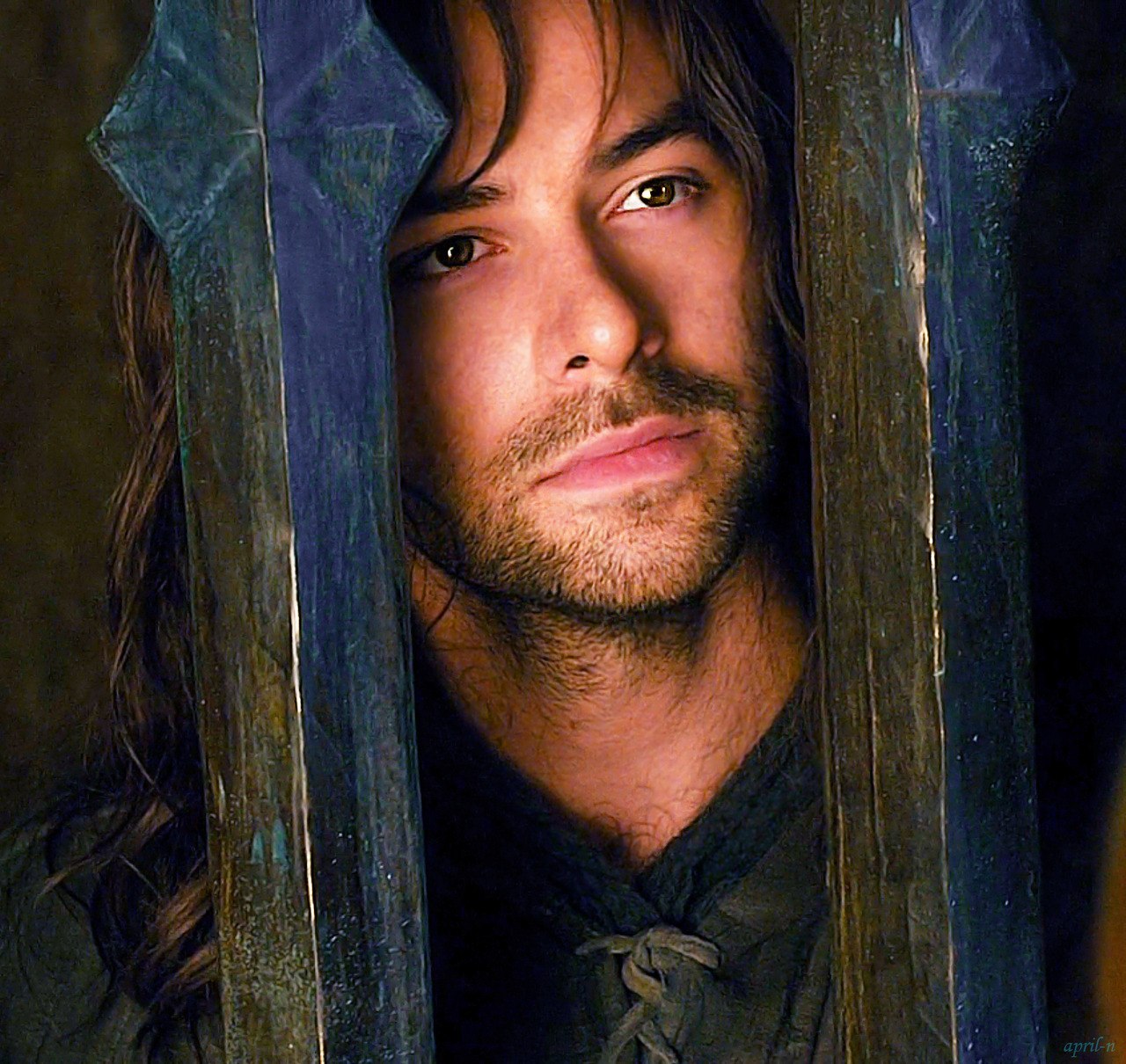 |
| Of course, how could I not include a picture from the Hobbit? Image posted by Swan Sandra |
ESTP (The Adventurer) - Dwarves
Dwarves are traditionally a practical, action-oriented race, traditionally associated with crafting, in the form of mining and metallurgy. Stereotypically, they are seen as a straightforward people, blunt and outspoken, though often possessing strong hearts and deep-rooted loyalties for those whom they consider friends. ESTPs, true to the title Adventurer, are always ready to leap into the action. They, like many Dwarves, can be seen as hotheaded, preferring to focus so much on what is that what could be that they will often refuse to plan or think ahead, instead living firmly in the moment. Dwarves within fantasy are often portrayed as highly moral people, often presented with codes of honour and firm views on justice. Whilst the ESTP might not follow unwavering principles, they do often see morality as didactic, thus they likely have opinions on what is right and this motivates them to act, even when culture or tradition might try to stop them. Adventurers are passionate about the physical and the sensory, seeking fun and excitement. Dwarves have a penchant for revelry as well, as displayed by their fondness of drinking.
 |
| Image posted by A Certain I Don't Know What |
ESFP (The Performer) - Satyrs and Maenads
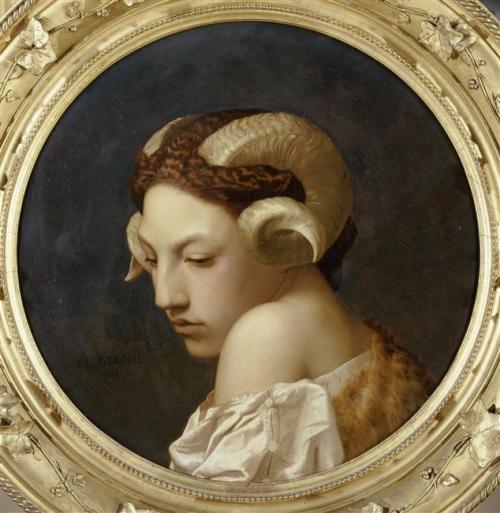
Somewhat less popular than dwarves are the followers of Dionysus, the Greek God of wine, song and revelry (known to the Romans as Bacchus). More than this, he was also a God closely aligned with pleasure, physically and was also known as the God of ritual madness and religious ecstasy. He has been used within philosophy, most notably that of Nietzsche, as a figure aligned with the nullification of the individual and entering into a unity with all things in order to avoid suffering. So let me explain how this might tie into the ESFP type.Well, the ESFP, Performer, type look upon life as an opportunity for happiness, seeing how they can enjoy themselves and how they can excite and connect with others. For the Performer, life is a party, with a few boring scenes to separate one festivity from another and this is very much in line with the followers of Dionysus, who very much have a "we sleep, we party" attitude to the world. They are bold and outspoken individuals, much like the Maenads who were certainly not soft-spoken and reserved types. ESFPs are well acquainted with desire and they embrace it, indulge in it, as do those who subscribe to Dionysus' doctrine. Hand in hand with this goes the ESFPs fluency when it comes to art and the aesthetic and, as I pointed out, half of Nietzsche's conception of aesthetics (within the birth of tragedy, at least) is built upon the Dionysian foundation. Dionysus is a god of music, which is itself a major branch of the creative artistic. Furthermore, ESFPs seek harmony, intimately so, and loath conflict or hostility, which matches with the "lighten up" and "let it go" attitude of the Dionysian. Finally, it is important to highlight that all this abundant energy and thirst for release in the form of revelry means that both ESFPs and Satyrs / Maenads are not the most focused of individuals, that it can be hard to keep their attention at times and they are loath to invest in anything they might consider to be boring.
 |
| Image posted by Venale |
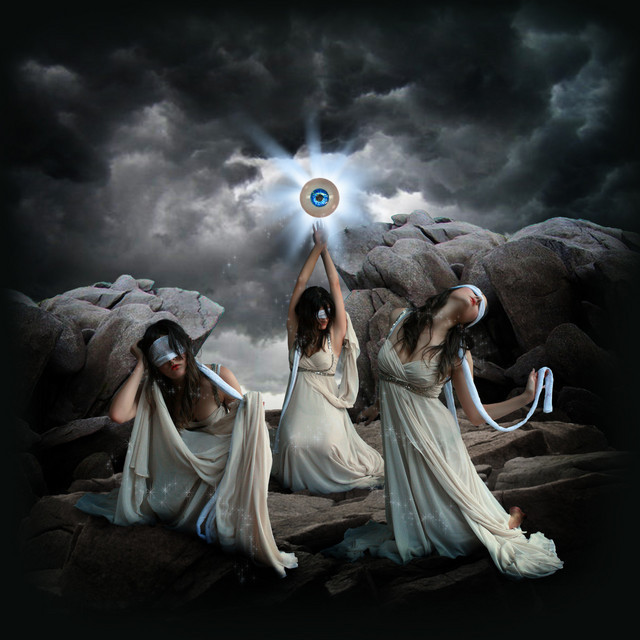
ISTP (The Crafter) - Graeae
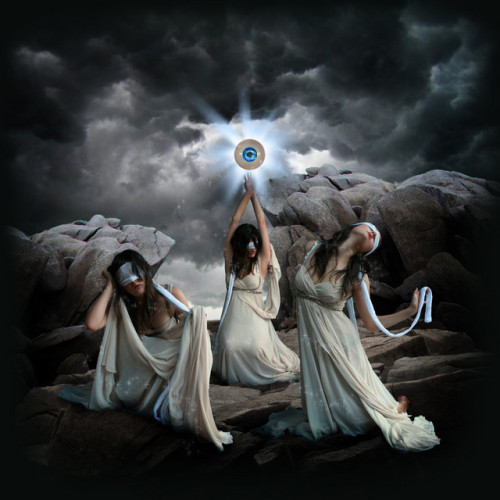
Also known as the fates, the Graeae are a trio of three women from Greek legend (there is also a Norse incarnation in the form of the Norn) who have great knowledge concerning the world and are able to see across time. They share a single eye between them, thus only one is able to see at a time and whilst each of these three individuals has a distinct personality, the concept of a seer or a mystic has its own personality archetype which we can compare to the ISTP.Firstly, I think that it is key to note the ISTP ability to remain relaxed, even in tense situations, as they are able to mentally, if not physically, distance themselves and think it a detached manner. This fits with the seer archetype, who is often able to see much, yet is able to do so only be standing mostly outside of it, peering in. This is not to say that the ISTP are impractical, quite the contrary, but it does mean that they are able to act, for lack of a better term, "professionally". They are actually very practical, though they understand when and where to act in order to have the most effect. In the stories, when a seer acts, their action is informed with mystical knowledge of events and it reverberates across the narrative, changing things greatly. Interestingly, the Crafter is known to be very grounded in the present, which may put them at odds with some of the future-obsessed seer types, though I would argue that the kind of seer these ISTP map to are those who, in spite of their foresight, know very clearly that they live in the present. Due in no small part to their perceptiveness, Crafters can be stubborn when it comes to defending their attitudes and convictions, much as those characters who can see the future, or at least beyond the present, are often forced, and more than able, to defend their predictions.
 |
| Image posted by Quark Master |
ISFP (The Composer) - Werewolves
I really do not think that I need to explain to anyone what a Werewolf is, so I'll just jump right in and explain how these tie to the ISFP, Composer, type.
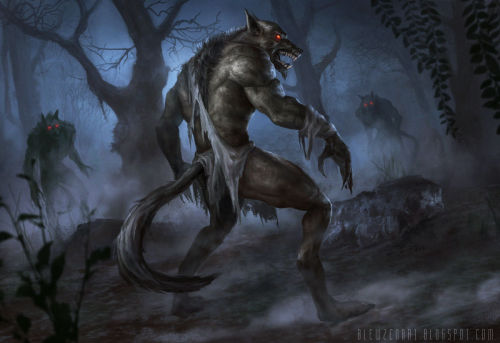
Composers are sensitive and creatively passionate individuals and this deep-rooted desire to express themselves and create themselves a stable identity is something which I think is centrally reflected in the Werewolf. These lycanthropes are often displayed as struggling with their own identities due to their straddling of two worlds: the human and the beastial, which often leads them to be very inwardly focused individuals, though this gives them, like ISFPs, a great desire to express themselves and to be understood by others. Ultimately, through an exploration of this inner nature, ISFPs are able to communicate to others who they are, often through some kind of artistic practice and this reflects many contemporary Werewolf stories in which the Werewolf reveals themselves as a Werewolf to another person. Another key point is that ISFPs, though often reserved, are deeply passionate people and, when the mood strikes them or the topic of conversation swings in their favour, they visibly brighten and are able to share their passion for that which they care about. Werewolves are creatures of passion as well, possessing this wild, inner-life, the call of the beast, which likewise fills them with passion and drive under the right circumstances (such as the full moon). ISFPs often struggle to relax this inner passion, which often makes them prone to stress, and this, I think, can be considered akin to the Werewolf trying to control the beast within themselves, if we class this beast as a wild and untamable passion for that which they hold dear.
So, that brings the first Beastiary entry to a close! In the next entry, I will be discussing the Analyst types: INTJs, INTPs, ENTJs and ENTPs - Devils, Sphinxes, Will-o'-the-Wisps and Dopplegangers!